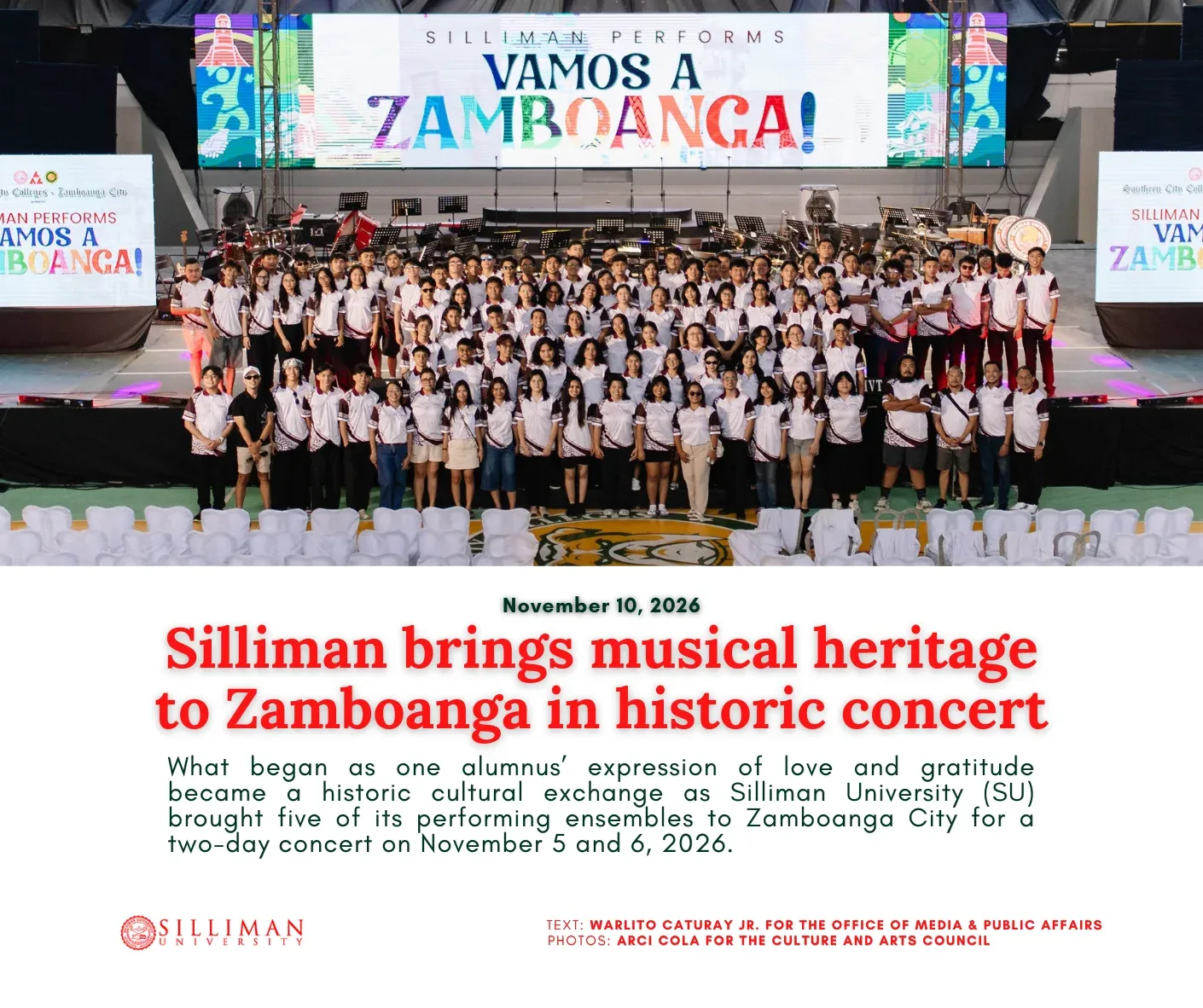
What began as one alumnus’ expression of love and gratitude became a historic cultural exchange as Silliman University (SU) brought five of its performing ensembles to Zamboanga City for a two-day concert on November 5 and 6, 2026.
The Southern City Colleges (SCC) East Campus Gymnasium came alive with music and dance as 100 student performers took the stage for Silliman Performs: Vamos a Zamboanga, showcasing the University’s rich musical heritage before an enthusiastic audience.
The concert featured the SU Concert Band, Campus Choristers, Men’s Glee Club, Dance Company, and Orkestra Sin Arko, marking the first time these ensembles performed together in Zamboanga.
Organized by the SU Culture and Arts Council (CAC), the undertaking was made possible through the invitation and generosity of Edwin Mateo Caliolio, SCC president and 2026 Outstanding Sillimanian Awardee, whose appreciation for the arts and enduring connection to his alma mater inspired the initiative.
A concert born of love and gratitude
For Caliolio, the initiative was also a way of honoring his ancestors as SCC celebrates its 80th anniversary this year.
His appreciation for music and the arts dates back to his student days at Silliman, when he purchased a season pass to cultural performances every semester beginning in his freshman year. These experiences shaped his understanding of the role of culture in enriching communities.
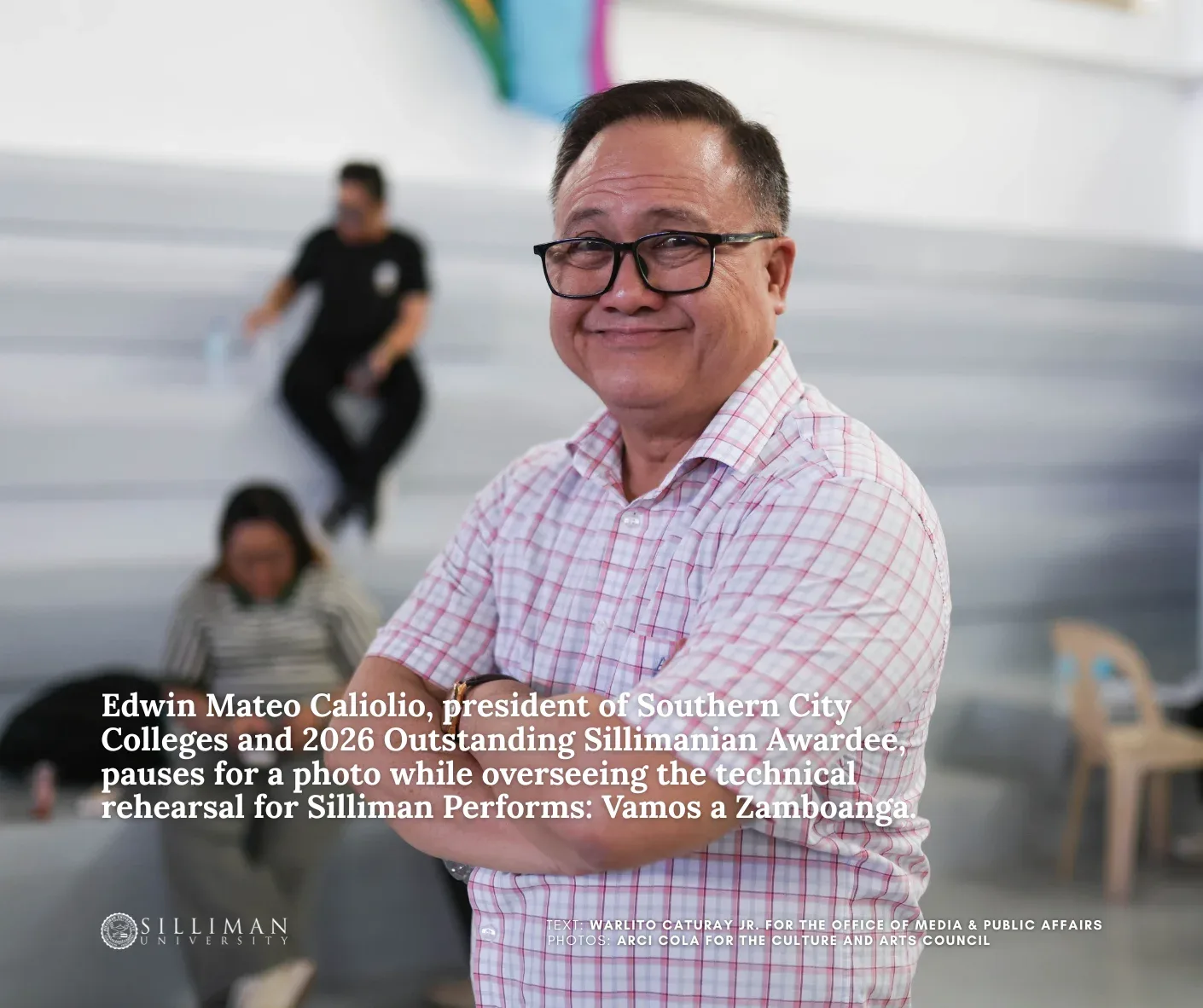
Equally influential was his membership in the Pan Hellenic Society, a socio-civic organization established at the University.
“What really made the difference is Pan Hellenic Society,” Caliolio recalled.
He particularly remembered the Society’s afternoon services at Silliman University Church, where he first opened the Bible and experienced the challenge of speaking before a congregation. These experiences helped shape his faith and commitment to service.
Caliolio also recalled a quotation displayed at the University Library that encouraged people to extend kindness and do good whenever the opportunity arises. He said the message has guided him throughout his life.
It was during the Pan Hellenic Society’s 60th anniversary in 2024 that Caliolio first explored the possibility of bringing Silliman’s performing ensembles to Zamboanga. The undertaking took two years to realize, given the logistical requirements of transporting approximately 100 performers and 23 production personnel. The University confirmed its approval in August 2026, paving the way for the November 5–6 performances.
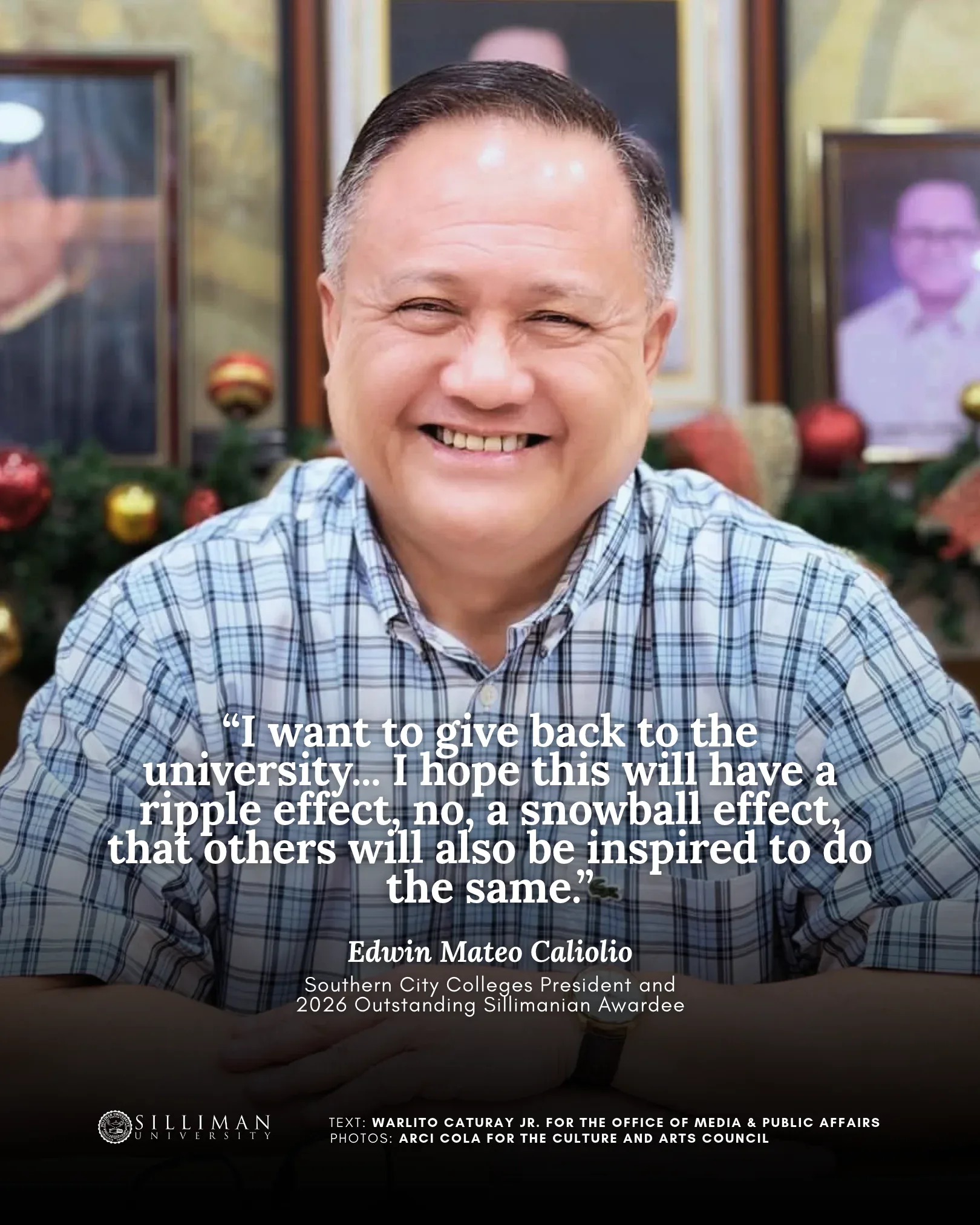
“I want to give back to the university,” Caliolio said, describing the initiative as an expression of God’s love and compassion.
He hopes the concert will inspire other Sillimanians to organize similar cultural initiatives in their respective communities.
“I hope this will have a ripple effect, no, a snowball effect, that others will also be inspired to do the same,” he said.
Caliolio also hopes to strengthen music education at SCC, beginning with the establishment of a music room and exploring opportunities for training and workshops with Silliman musicians.
A celebration of musical heritage
Directed by Angelo Sayson, the concert showcased the breadth of Silliman’s artistic traditions, beginning with the production number Vamos a Zamboanga, composed by Norma Camins-Conti.
The repertoire moved across musical genres and generations, from selections from The Lion King, Moana, and Frozen to contemporary Filipino hits, including a BINI medley. The Campus Choristers performed Baba Yetu and Man in the Mirror, while Orkestra Sin Arko brought its distinctive plucked-string sound to arrangements of Michael Jackson and Mario music.
The Men’s Glee Club performed Bongga Ka Day and a medley of Backstreet Boys’ hits, while the Dance Company added movement and visual storytelling throughout the production.
Other selections included Un Sitio de Amor y Paz, Isang Dugo, Isang Lahi at Musika, and an OPM medley celebrating Filipino musical creativity.
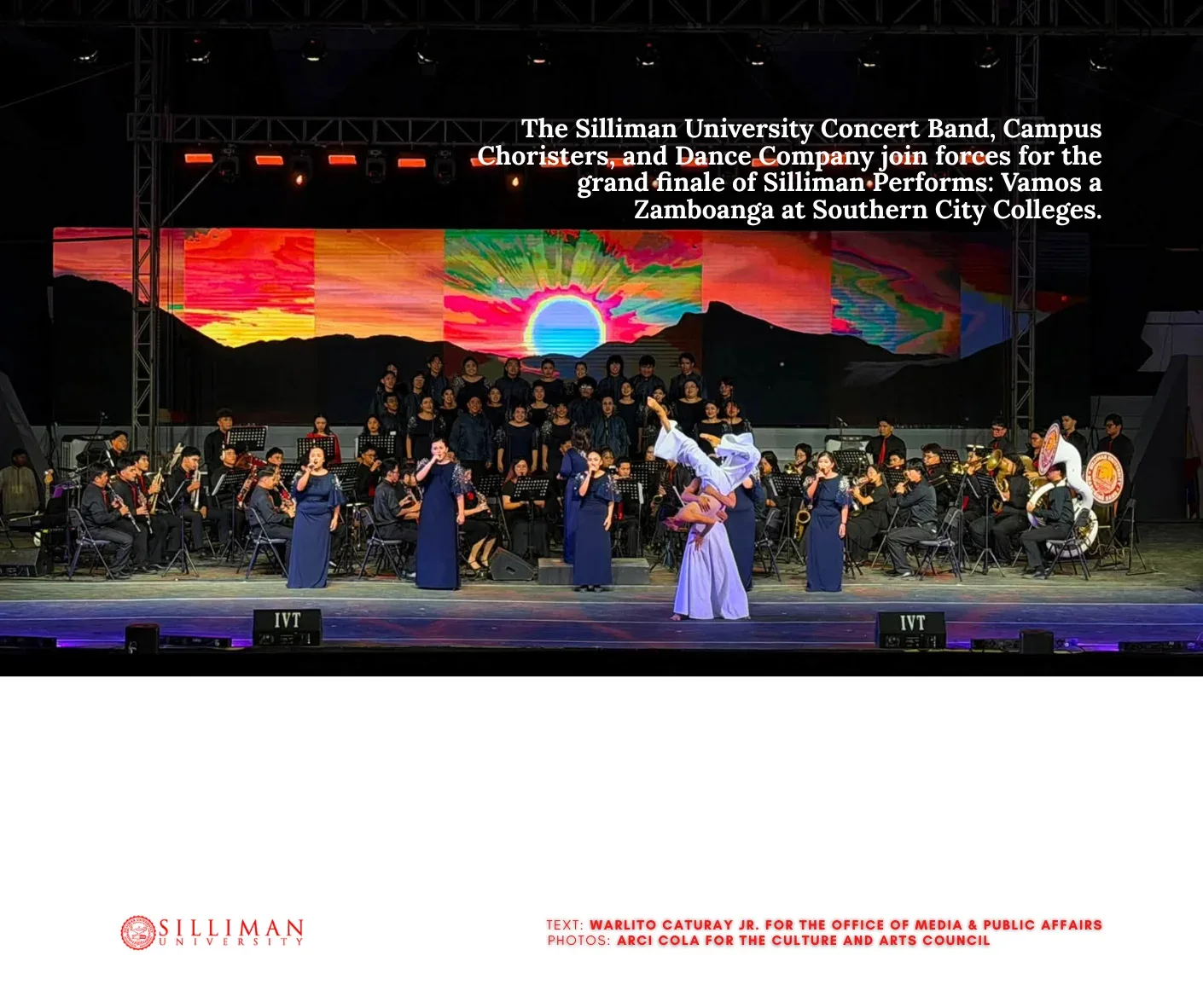
For Dr. Diomar C. Abrio, director of the SU CAC, the concert reflected the University’s commitment to whole-person education, particularly Culture as one of its five learning venues.
Through artistic performances, he explained, students develop discipline, creativity, leadership, teamwork, and appreciation for cultural diversity.
He emphasized that touring also allows students to become cultural ambassadors, sharing their talents while learning from communities outside Dumaguete.
Learning beyond the campus stage
For the ensemble directors, the Zamboanga performances demanded preparation, flexibility, and discipline.
Asst. Prof. Joseph Albert Basa, director of the SU Concert Band, said preparations had to be integrated into the ensemble’s already demanding schedule, which included its 120th anniversary concert and Buglasan performances.
Performing outside Dumaguete, he explained, offered students opportunities to encounter different audiences and cultures while representing their University.
“It is both a privilege and a responsibility,” Basa said.
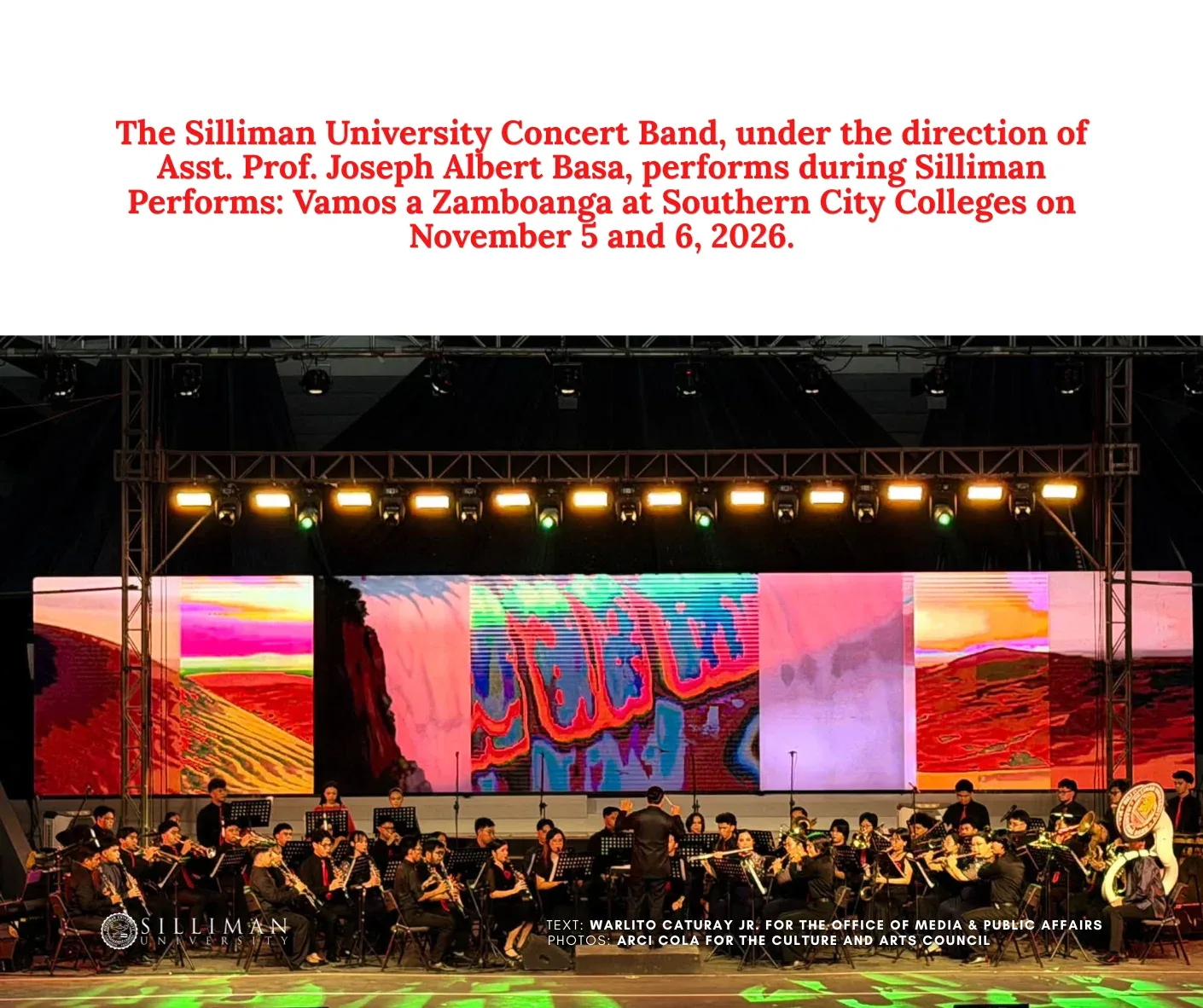
Asst. Prof. Mathilda L. Erojo, director of Orkestra Sin Arko, likewise described the challenge of preparing for an unfamiliar audience. She selected accessible musical pieces and required performers to memorize their repertoire, helping reduce the burden of traveling with instruments and other materials.
Dr. Elizabeth Susan Vista-Suarez, the show’s musical director, former director of the Campus Choristers, and its guest artistic director, emphasized the importance of preparing students to adapt to unfamiliar performance conditions.
“Experiences like these are outside the classroom learning,” she said, adding that the aesthetic experiences gained from such opportunities become lifelong lessons.
For the students, the learning extended well beyond rehearsals and performances.
Kim M. Delbaere, a second-year Marine Biology student and SU Band member, described the excitement of performing in a region she had never visited.
She recalled the band’s opening performance, when months of preparation came together through synchronized movements and a unified sound. The confetti and sparklers during the finale made the experience particularly memorable.
Offstage, the journey offered equally valuable experiences, including traveling by ship, exploring Zamboanga, and building friendships with fellow performers.
Fourth-year Political Science student and band member Josiah Immanuel Orbeta found meaning in the camaraderie developed throughout the trip.
The experience also deepened his appreciation of Silliman’s cultural environment.
“Not all places have the opportunity to play in a performing group like what Silliman offers. I have learned to be proud of my school and community,” he said.
An audience inspired
For students of SCC, the performances were an unexpected cultural treat.
Louise Gabriel C. Testa, a first-year Bachelor of Elementary Education student and member of a performing arts group, described his reaction as one of amazement.
“I was so shocked and amazed,” he said, expressing admiration for the visiting performers.
Asked which numbers stood out, he replied, “All of it. Walang tapon.”
Maria Luz Rosalado, a Bachelor of Secondary Education student, similarly expressed surprise at the quality of the production.
“Hindi namin ine-expect na sobrang ganda ng show,” she said.
The appreciation continued after the performances. In a message to the Culture and Arts Council, audience member Jay-el Carpio Cuadra thanked the performers for bringing happiness and inspiration to the community.
“You did not just entertain us; you also made us smile and created beautiful memories that we will cherish,” Cuadra wrote.
The Zamboanga performances demonstrated how the arts can bring educational institutions and communities together. For the audience, the concerts offered an opportunity to experience Silliman’s rich musical traditions. For the student performers, the tour provided valuable lessons in adaptability, collaboration, and cultural appreciation.
In sharing their talents with a new audience, the young Sillimanians also experienced firsthand an important lesson of whole-person education: that the value of their gifts lies not only in developing them, but also in sharing them with others.