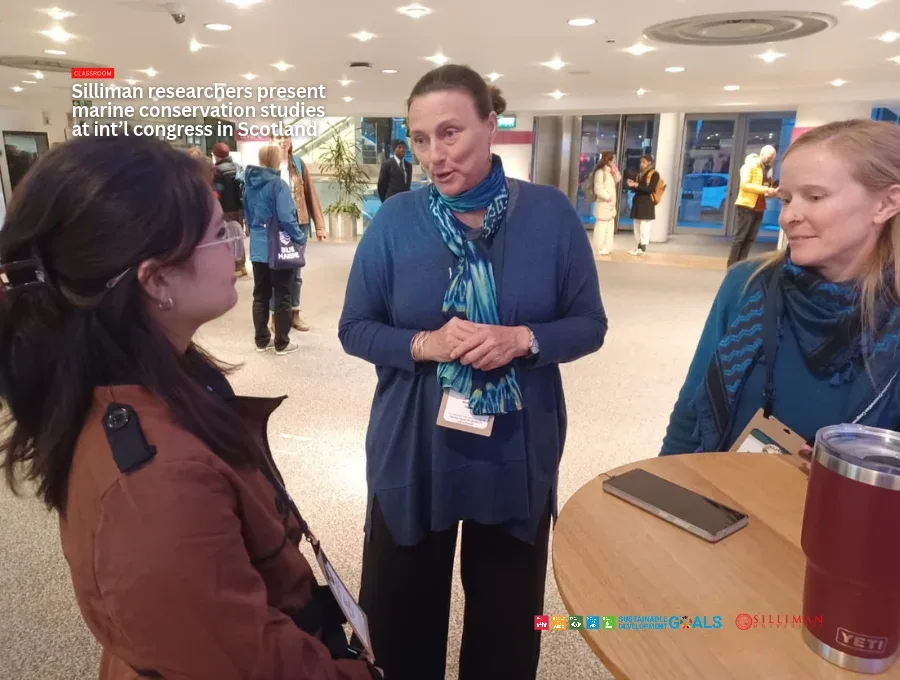
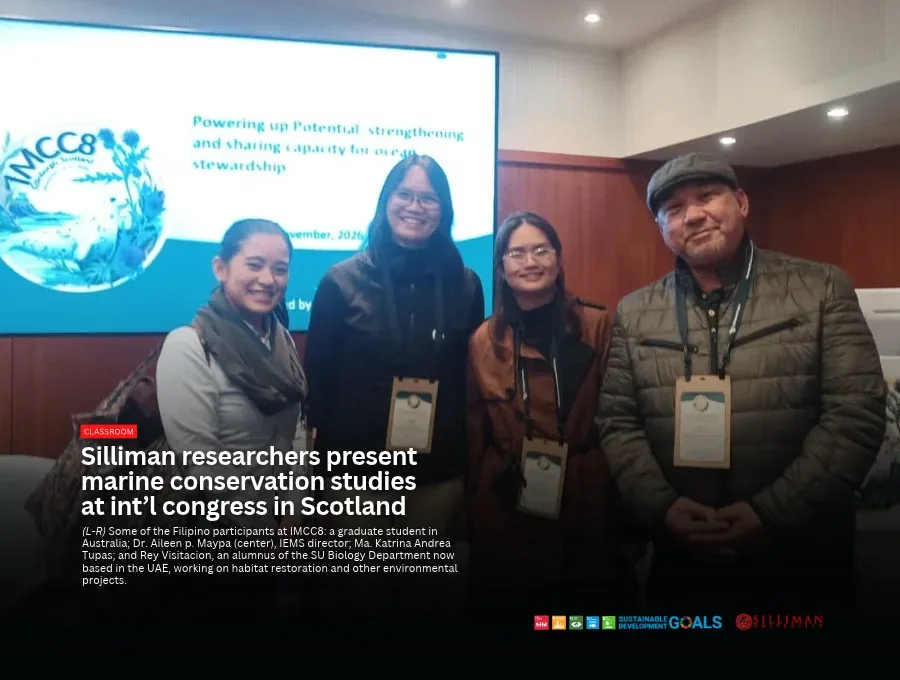
Silliman University (SU) researchers presented studies on coral reef restoration and marine biodiversity at the 8th International Marine Conservation Congress (IMCC8), held November 13–17, 2026, at the Edinburgh International Conference Center in Edinburgh, Scotland.
Representing the University’s Institute of Environmental and Marine Sciences (IEMS) were IEMS Director Dr. Aileen Maypa and Ma. Katrina Andrea Tupas, a Master of Science in Marine Biology student, whose participation contributed Philippine research perspectives to international discussions on marine biodiversity conservation, ecosystem restoration, and sustainable ocean management.
Convened biennially by the Global Marine Program of the Society for Conservation Biology (SCB), IMCC8 gathered approximately 700–800 participants from around the world.
The congress brought together scientists, students, policymakers, regulators, conservation practitioners, educators, fishers, journalists, artists, and other stakeholders committed to addressing pressing global ocean challenges.
The congress featured research presentations, expert panel discussions, and specialized sessions on fisheries management and marine protected areas. It also provided opportunities to exchange scientific knowledge, share innovative management tools and policy recommendations, and explore practical conservation solutions through poster exhibitions and documentary film screenings.
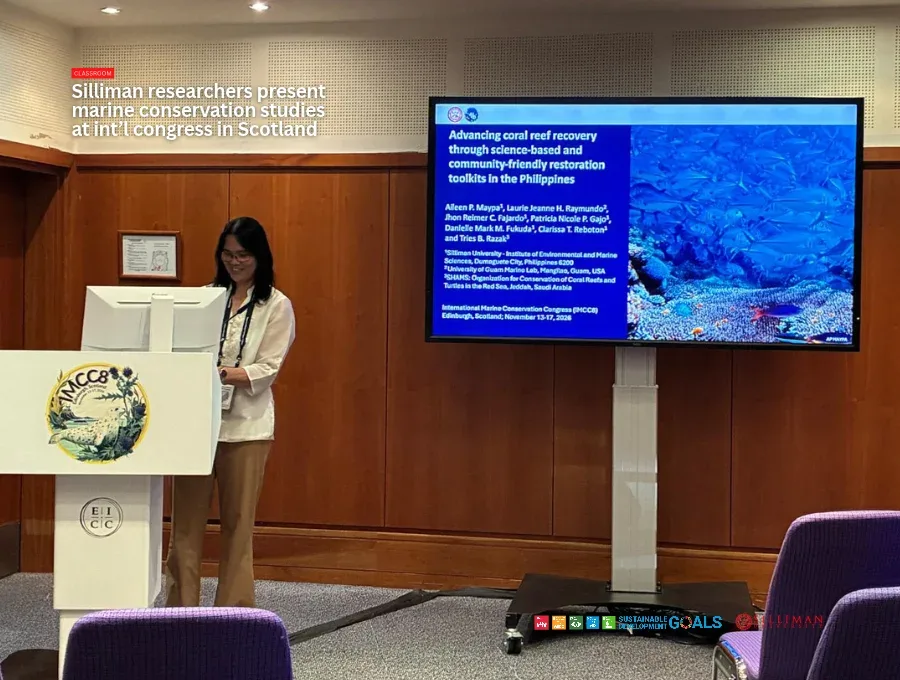
Maypa presented her research entitled “Advancing Coral Reef Recovery through Science-Based and Community-Friendly Restoration Toolkits in the Philippines” during the symposium “From Innovation to Impact: Marine Ecosystem Restoration in Asia,” organized by Kayla Ripple of the Pew Fellows Marine Conservation Program.
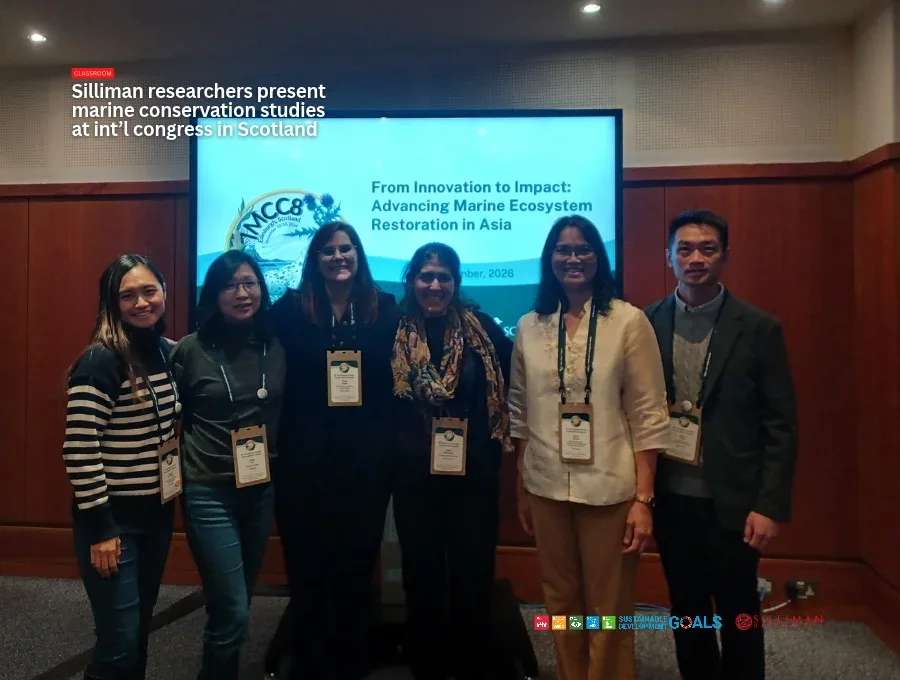
The presentation forms part of Maypa’s research under her Pew Fellowship in Marine Conservation, following her recognition as a Pew Marine Fellow in 2025.
Her presentation highlighted findings and lessons from selected active coral reef restoration initiatives in the central Philippines, examining the effectiveness and suitability of various restoration protocols, the importance of community engagement and participatory co-design, and the factors influencing the success or limitations of restoration interventions.
Maypa also discussed how scientific approaches can be translated into practical and locally appropriate restoration strategies. By examining successful and unsuccessful interventions and the factors behind their outcomes, she emphasized the importance of adaptive management, evidence-informed decision-making, and meaningful community participation in accelerating coral reef recovery.
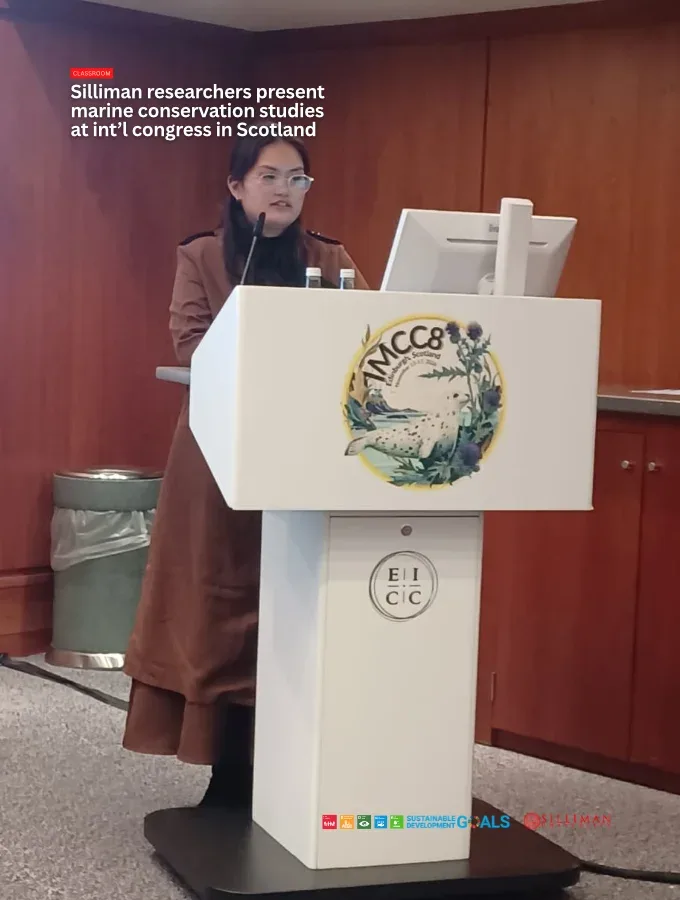
The symposium also featured three other Pew Fellows in Marine Conservation whose research focuses on marine ecosystem restoration in Asia, fostering interdisciplinary exchange and regional collaboration.
Meanwhile, Tupas presented her research entitled “Morphological Characteristics of Neotrygon Castelnau, 1873 Species Complex from Hinigaran, Negros Occidental, Philippines.”
Her study examined the morphological characteristics of the Neotrygon species complex documented in Hinigaran, contributing to scientific understanding of the taxonomy and morphological diversity of marine elasmobranchs in the Philippines.
Neotrygon is a genus of stingrays commonly known as maskrays.