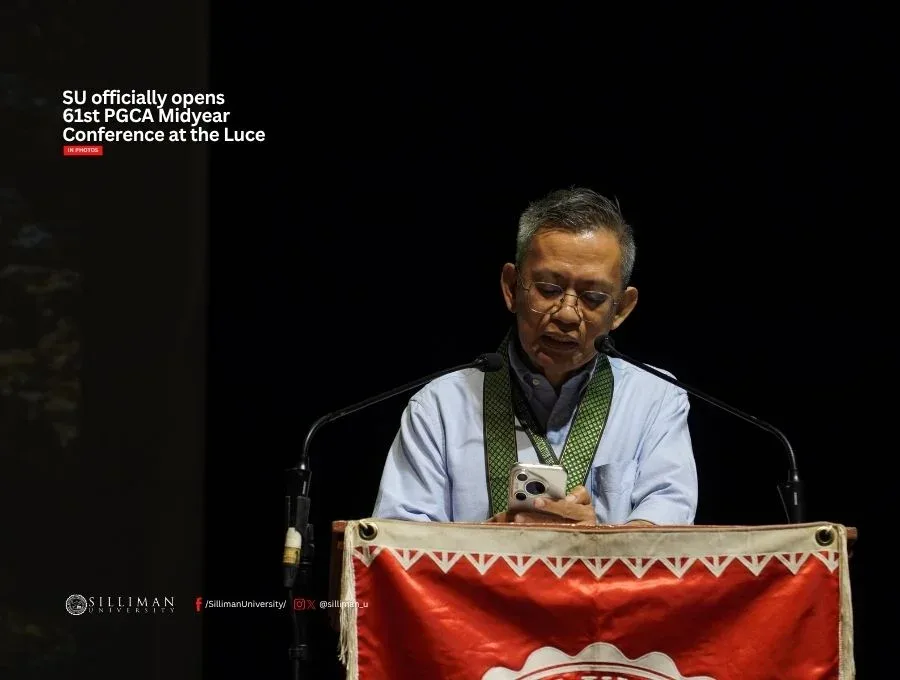
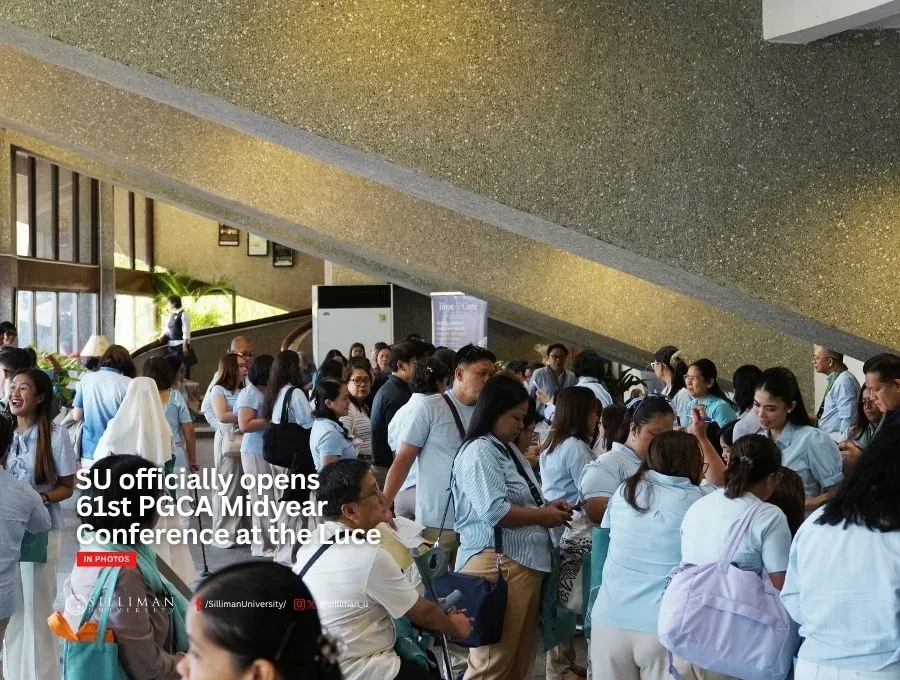
Silliman University (SU) kicked off today, October 22, 2026, its hosting of the 61st Midyear Conference of the Philippine Guidance and Counseling Association, Inc. (PGCA), bringing together guidance counselors, psychologists, psychometricians, social workers, educators, and other helping professionals from across the country for a two-day gathering on emerging challenges and directions in the helping profession.
Organized by PGCA, Inc. in partnership with SU and the PGCA Negros-Siquijor Local Chapter, the conference carries the theme, “The Global Helping Professional: Images. Realities. Aspirations.”
Upholding humanity in the helping profession
In her welcome remarks, PGCA, Inc. President Dr. Evangeline P. Aguilan emphasized the importance of balancing professional competence with compassion and a commitment to human dignity amid rapid technological and societal changes.
Aguilan noted that developments in artificial intelligence, increasingly complex mental health concerns, disasters, displacement, and social inequalities require helping professionals to continuously adapt while remaining grounded in ethical practice and service.
“The future of helping will never be defined by the technology alone. The future will be defined by the quality of our humanity,” she said, underscoring the need to uphold integrity, cultural responsiveness, and respect for human dignity in professional practice.
Representing SU, Vice President for Academic Affairs and Research Dr. Lily Ann D. Bautista welcomed the delegates and highlighted the importance of professional partnerships in addressing the needs of individuals, institutions, and communities.
Bautista emphasized that educational institutions have a responsibility to foster inclusive environments where mental health is valued, diversity is respected, and seeking assistance is encouraged.
The University vice president also underscored the connection between student success, emotional well-being, a sense of belonging, and access to appropriate support services.
Bautista hopes the conference would strengthen professional networks, encourage the exchange of research-based insights, and advance more responsive services for individuals and communities, while also inviting delegates to explore SU's campus and appreciate its history, natural environment, and heritage.
Connecting policies with professional practice
PGCA, Inc. Vice President for Internal Affairs Ma. Honey Belle B. Vicencio, in her overview of the conference, highlighted the expanding responsibilities of helping professionals, which now include mental health advocacy, policy implementation, the promotion of safe and inclusive communities, and the responsible use of emerging technologies.
Citing Republic Act (RA) 11036, or the Mental Health Act, and RA 12080, or the Basic Education Mental Health and Well-Being Promotion Act, as important legislative frameworks for strengthening mental health support in educational institutions and communities, she explained that the conference program was designed to connect policies with professional practice through plenary sessions, workshops, and opportunities for professional fellowship.
The sessions will cover professional identity, emerging mental health concerns, ethical technology use, and strategies for improving counseling and support services.
The second day will likewise feature simultaneous workshops at basic, intermediate, and advanced levels, covering topics such as peer support in school guidance programs, youth well-being, gender-affirming counseling, psychological flexibility, artificial intelligence in mental health practice, clinical interviewing, interventions for adolescent depression, and research writing and publication.
Advancing the profession’s aspirations
Meanwhile, Professional Regulation Commission (PRC) Chairperson Hon. Charito A. Zamora discussed three key aspects of the conference theme through her keynote: the image of the helping professional, the realities confronting the profession, and the aspirations that should guide its future.
Zamora explained that the image of the helping professional extends beyond providing advice to recognizing human potential, upholding dignity, and empowering individuals to make informed decisions.
“Helping is not about having all the answers. It is about creating a safe space where people feel heard, understood, and supported,” she said, emphasizing the need to combine professional competence with compassion.
Zamora identified mental health concerns, social pressures, digital risks, and emerging technologies as realities or challenges confronting the profession and affecting individuals and communities.
While artificial intelligence offers new possibilities for professional practice, it also raises concerns about confidentiality, sound judgment, and preserving human connection.
She also cited RA 11036 and RA 12080 as important frameworks for strengthening mental health support, stressing that their objectives must be translated into meaningful action through collaboration among schools, universities, government agencies, professional organizations, families, and communities.
“Technology may enhance our work, but it cannot replace human empathy, professional judgment, and accompaniment,” Zamora said.
Underscoring the profession’s aspirations, Zamora also encouraged participants to pursue global competence while remaining responsive to the needs and contexts of Filipino individuals and communities.
Reiterating the PRC's guiding principle, “Integrity in Practice, Trust in Service,” she emphasized continuous learning, research, collaboration, and adherence to ethical standards, noting PGCA’s role in advancing professional standards and providing opportunities for practitioners to learn from one another.
The conference provides a national platform for helping professionals to exchange knowledge, strengthen professional relationships, and explore ways to respond to evolving mental health and psychosocial needs. Through the gathering, participants were encouraged to translate their learning into ethical, inclusive, and compassionate practices that support the well-being of individuals and communities.