SU faculty present research at 47th UGAT Conference
Silliman University scholars took active roles in the 47th Annual Ugnayang Pang-Aghamtao (UGAT) Conference, held November 12–14, 2025 at Holy Name University and the National Museum Bohol in Tagbilaran City.
With this year’s theme, “Engaging Anthropology: Anthropology in Action,” the gathering convened anthropologists, scholars, community leaders, development workers, and activists to reflect on engaged anthropology and its role in addressing pressing societal issues.
The conference, organized in partnership with the Pambansang Asosasyon ng mga Mag-aaral ng Aghamtao (PAMANA) and supported by the UP Diliman Office of the Vice Chancellor for Research and Development, reaffirmed UGAT’s long-standing commitment to grounding anthropological practice in community-based research, teaching, and public engagement. Since its founding in 1978, UGAT has consistently positioned anthropology as a discipline responsive to national and global issues shaping Philippine society and culture.
On gendered labor and ethical engagement
Dr. Enrique G. Oracion, faculty of the Department of Anthropology and Sociology, presented his paper “Gender, Work, and Well-Being Among Wives in Municipal Fishing Communities in the Visayas, Philippines.” His study examined the diverse and often undervalued roles of wives in municipal fishing households, exploring how women navigate productive and reproductive tasks amid dwindling marine resources and growing climate pressures. Drawing from qualitative and quantitative data, Oracion underscored how women balance multiple responsibilities at various life stages, their participation in coastal resource management, and the implications of gendered labor divisions on their physical, psychological, and social well-being.
Oracion also joined distinguished anthropologists from across the Philippines in the Plenary Roundtable Discussion titled “Beyond Clearance: Rethinking Ethical Engagements with Communities and Institutions.” The panel examined how the bureaucratization of research ethics, through institutional review boards and documentation-heavy procedures, both protects and constrains ethnographic research. Speakers highlighted inequities faced by independent scholars, regional universities, and community researchers, calling for a reimagining of ethics as an ongoing, relational dialogue rather than a procedural hurdle.
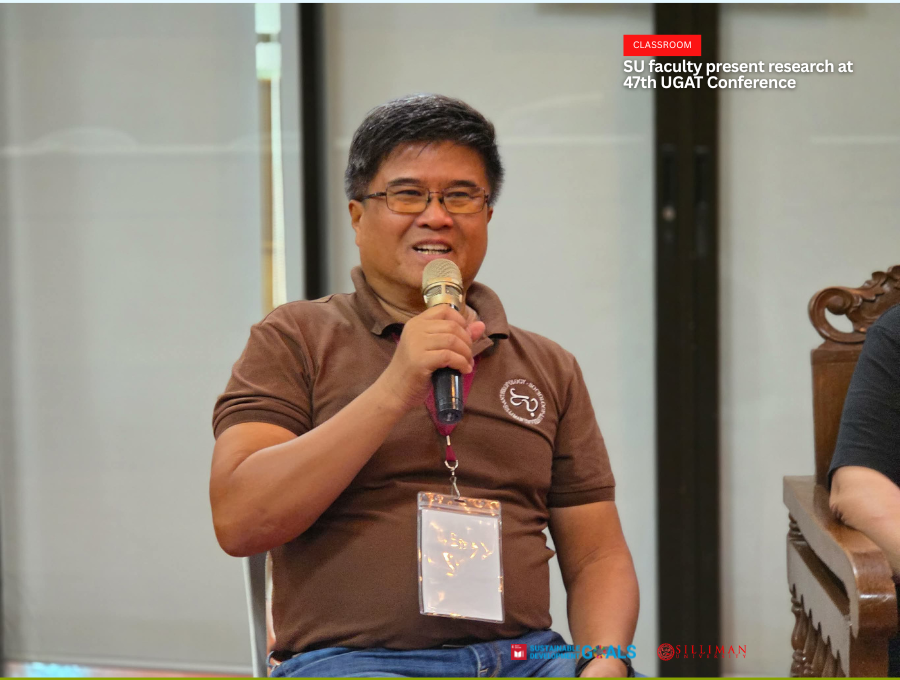
Dr. Enrique G. Oracion represents Silliman University in the plenary roundtable “Beyond Clearance: Rethinking Ethical Engagements with Communities and Institutions.”
Ethnography of crisis and innovation
Meljoe S. Loreto, also a faculty member, presented his research “From Immersion to Innovation: Ethnographic Insights from the Community Market Amid the COVID-19 Pandemic in Negros Oriental.” His study, based on immersion in the Malatapay community market in Zamboanguita, documented how sellers, buyers, and local authorities responded to mobility restrictions, shifting market interactions, and widening social and economic disparities during the pandemic. Loreto’s findings illustrated how traditional market practices were disrupted but also how communities adopted digital tools to sustain commerce, preserve cultural practices, and strengthen local engagement. He recommended enhancing digital literacy to support safer and more inclusive community interactions.
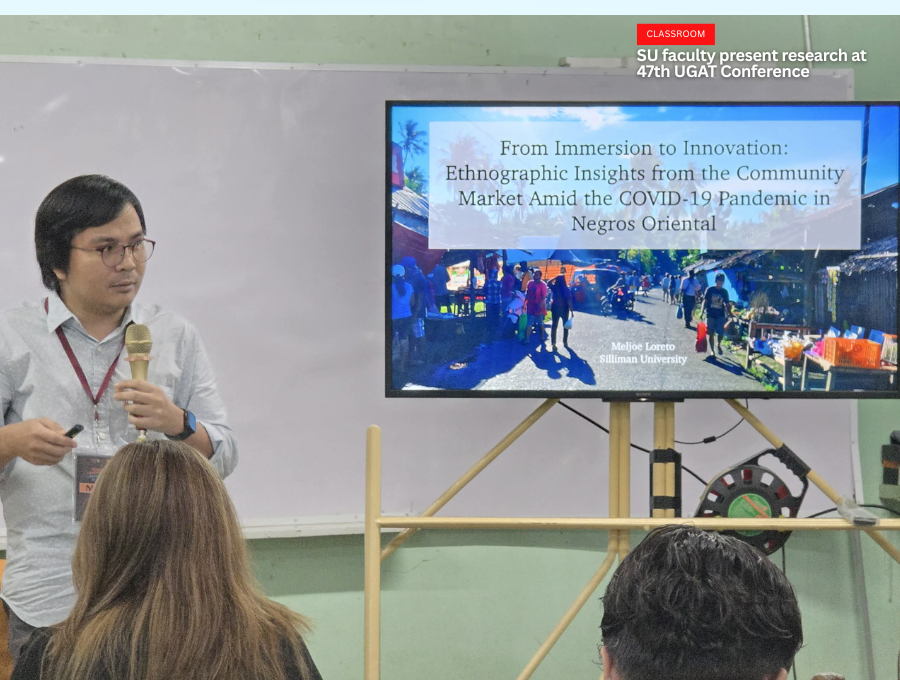
Meljoe Loreto, a faculty member of the Anthropology & Sociology Department, shares his research “From Immersion to Innovation: Ethnographic Insights from the Community Market Amid the COVID-19 Pandemic in Negros Oriental.”
Silliman delegation includes faculty, students, and alumni
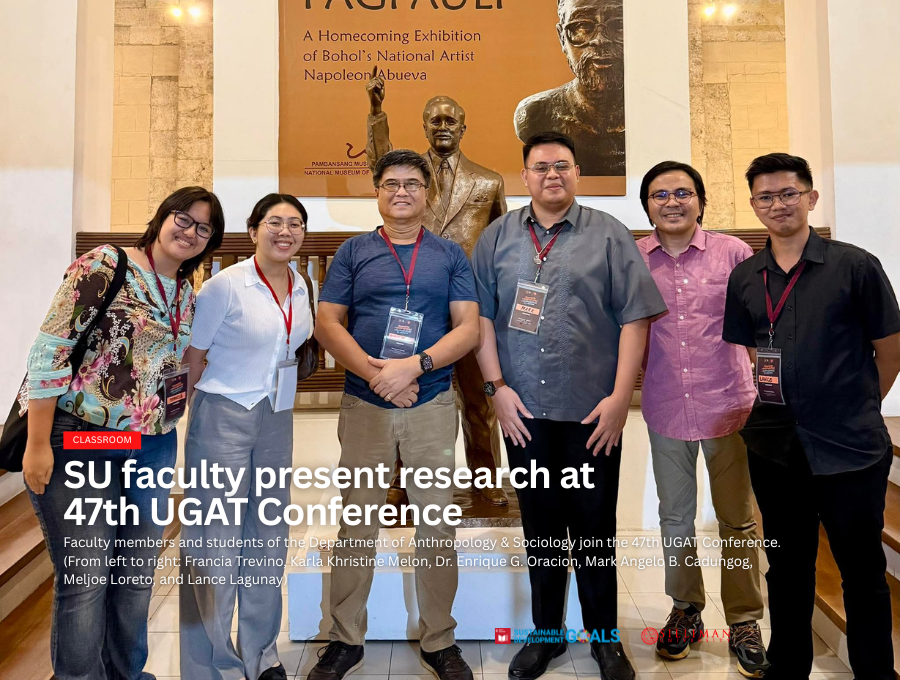
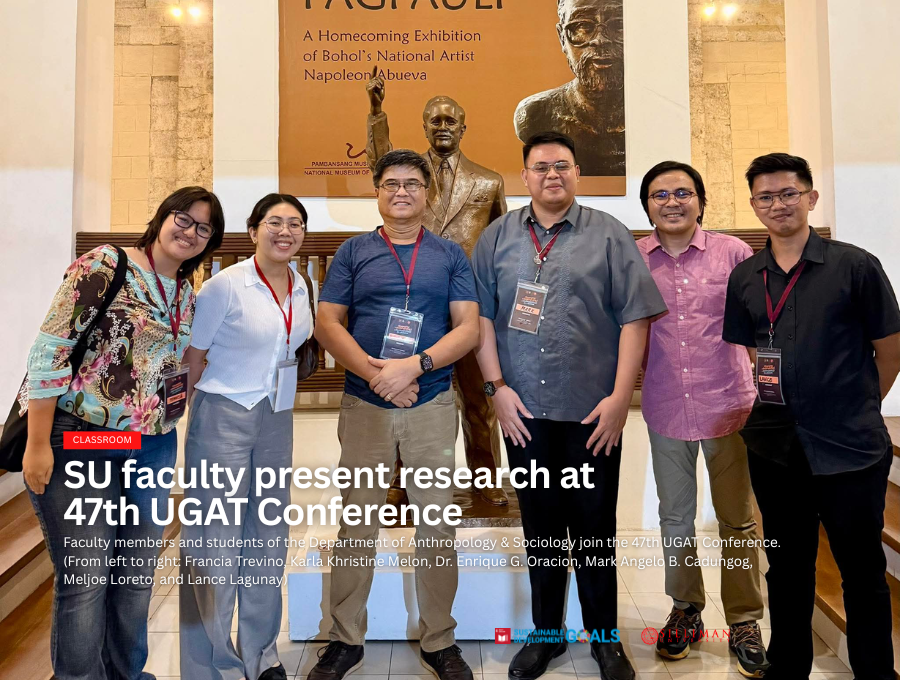
Alongside Oracion and Loreto, the Silliman delegation included Karla Khristine Melon and Mark Angelo Cadungog as participants, student Francia Trivino, and alumnus Mr. Lance Lagunay, demonstrating the University’s commitment to multi-level engagement in national anthropological discourse.
A continuing commitment to engaged anthropology
The 47th UGAT Conference provided a platform for Silliman scholars to contribute to critical national conversations on gender equity, ethical research practice, community resilience, and the future of anthropology in the Philippines. Their participation underscores Silliman University’s dedication to scholarly rigor, community partnership, and the advancement of socially responsive anthropology.


