SUCN students earn recognition at 4th Nursing Theory Symposium
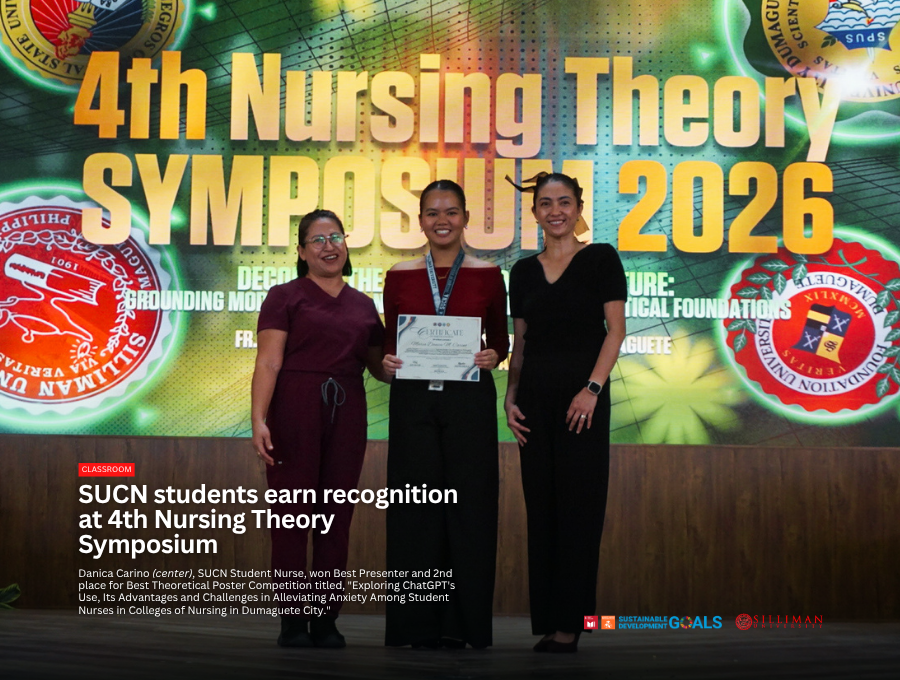
Silliman University College of Nursing (SUCN) participated in the Fourth Nursing Theory Symposium on October 12, 2026, at Father Luis Chauvet Hall, St. Paul University Dumaguete, where SUCN student nurse Danica Carino was named Best Presenter and won second place in the Best Theoretical Poster Competition.
Carino presented the research study, “Exploring ChatGPT’s Use, Its Advantages and Challenges in Alleviating Anxiety Among Student Nurses in Colleges of Nursing in Dumaguete City.”
Fellow SUCN student nurse Eli Manaban also presented his study, “The Relationship Between Artificial Intelligence (AI) Usage and Health-Seeking Behaviors Among Allied-Health College Students of Silliman University.”
The symposium, themed “Decoding the Roots, Coding the Future: Grounding Modern Digital Nursing in Timeless Theoretical Foundations,” gathered more than 600 nursing students from the four nursing schools in Dumaguete City: SUCN, Negros Oriental State University (NORSU), Foundation University College of Nursing (FUCN), and St. Paul University Dumaguete (SPUD).
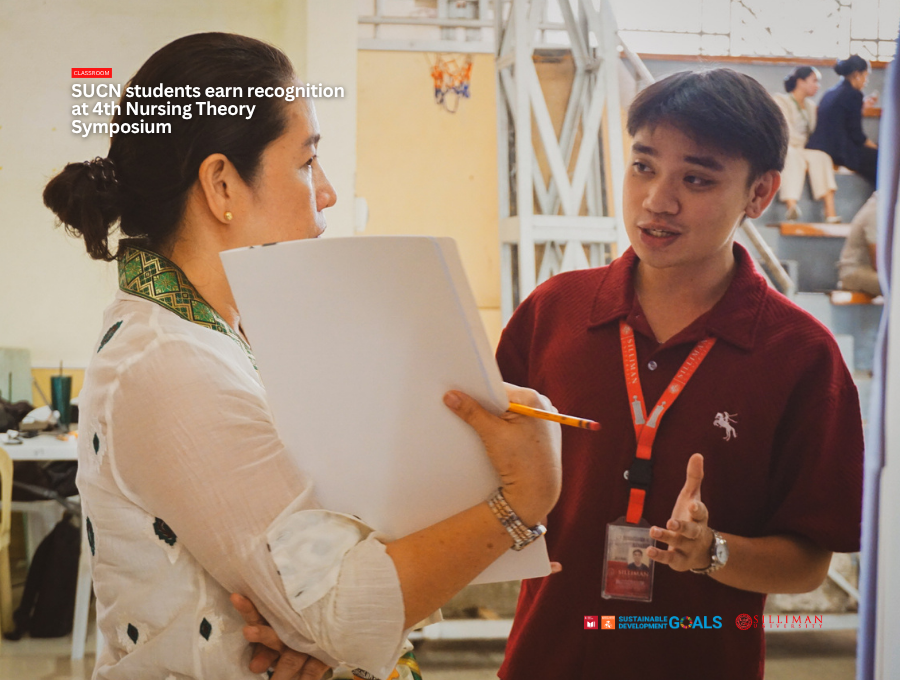
Eli Manaban (right), SUCN Student Nurse, presentS his nursing research study, “The Relationship Between Artificial Intelligence (AI) Usage and Health-Seeking Behaviors Among Allied-Health College Students of Silliman University,” to Asst. Prof. Kathleah Caluscusan (left), one of the Judges for the Research Poster Presentation.
Participants included Level I nursing students and their clinical instructors, selected Level IV student researchers who presented their work through research posters, and Master of Science in Nursing students.
The gathering provided opportunities for academic exchange among nursing students, faculty members, researchers, and nursing scholars.
The symposium was initiated by Dr. Freslyn Lim-Saco of SUCN during the pandemic as a performance task in the Theoretical Foundations of Nursing course.
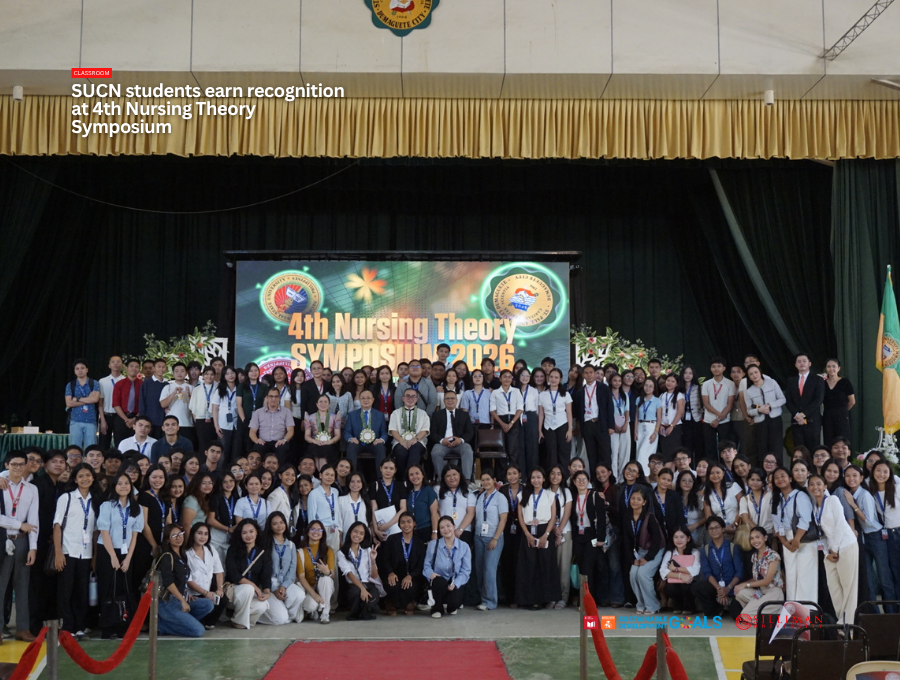
The speakers pose together with the SUCN Level 1 nursing students (Class 2030).
From a classroom learning activity, it developed into an inter-school platform connecting nursing theory, research, and practice. Its first in-person edition was held in 2023.
The fourth symposium featured keynote speaker Dr. Jose Mari Louis G. Alforque and panel speakers Dr. Nova Leon of NORSU, Dr. Lim-Saco of SUCN, Dr. Cliford Kilat of SPUD, Mr. Jethri Ken Carlo Catalan of FUCN, and Dr. Rozzano Locsin of Florida Atlantic University.
Their presentations explored the continuing relevance of nursing theory in digital care, Synchronicity in Human–Space–Time, nursing judgment in the age of artificial intelligence, theory-informed innovation, and Technological Competency as Caring.
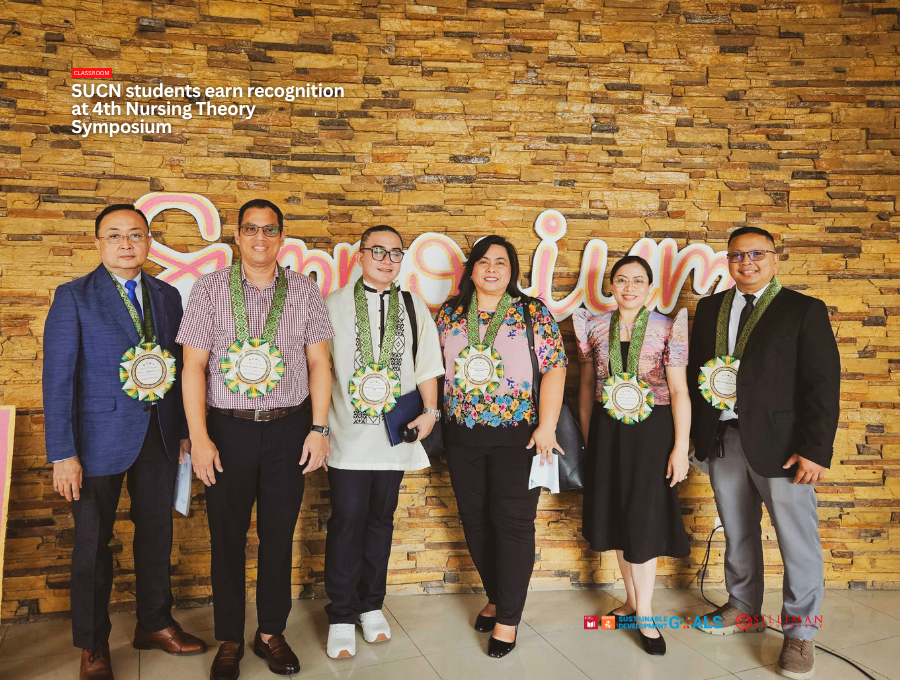
Keynote Speaker Dr. Jose Mari Louis G. Alforque (third left) together with panel speakers Dr. Nova Leon (NORSU) (3rd from right), Dr. Freslyn Lim-Saco (SUCN) (second right), Dr. Cliford Kilat (SPUD) (right), Mr. Jethri Ken Carlo Catalan (FUCN) (second left), and Dr. Rozzano Locsin (Florida Atlantic University) (left). Their presentations addressed the relevance of nursing theory in digital care, nursing engagement, artificial intelligence, innovation, and Technological Competency as Caring.
An open forum allowed students to raise questions about artificial intelligence, robotics, nursing theories, and the role of human caring in technology-driven healthcare. Discussions also addressed whether robot nurses could replace human nurses in the future.
Strengthening collaboration among Dumaguete City’s four nursing schools and highlighting the importance of nursing theories in guiding compassionate, ethical, and evidence-based care, the symposium continues to encourage future nurses to connect nursing’s theoretical foundations with contemporary healthcare developments, emphasizing the enduring value of human engagement and caring in an increasingly digital healthcare environment.


