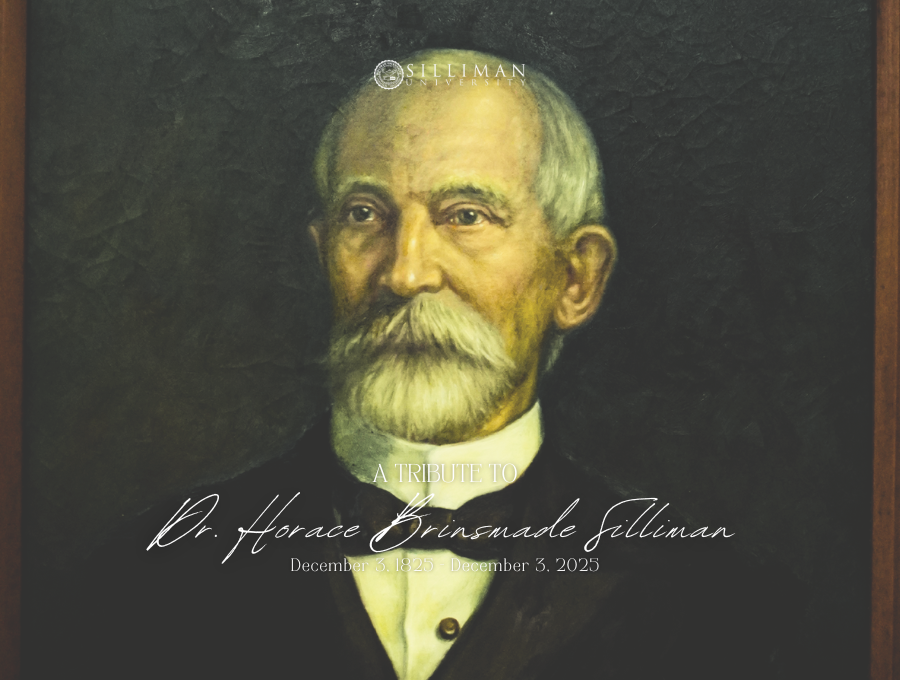
A TRIBUTE TO DR. HORACE BRINSMADE SILLIMAN
By Assoc. Prof. Regan Jomao-as
Dr. Horace Brinsmade Silliman (1825–1910) stands among the most remarkable philanthropists of his time—a man whose generosity, civic leadership, and global vision transformed both his hometown of Cohoes, New York, and a distant community in Dumaguete, Philippines. Horace grew up guided by the enduring values instilled by his parents, Levi and Clarissa Silliman. Their faith, commitment to service, and strength deeply shaped his character. In their honor, he later built one of his most cherished contributions to Cohoes—the Silliman Memorial Church.
Educated at Albany Academy and later at Union College in New York, he graduated in 1846 as a member of Phi Beta Kappa, one of the oldest and most prestigious honor societies in the United States, recognizing academic excellence in the liberal arts and sciences. His academic excellence and civic stature later earned him honorary LL.D. degrees from both Union and Hamilton Colleges; Hamilton even offered him its presidency, a distinction he humbly declined. With remarkable business acumen—first as a druggist, then in insurance, and later in mill supplies—he amassed a substantial fortune. Yet it was his philanthropy, not his wealth, that defined him.
Throughout his life, Dr. Silliman gave generously of both time and resources to Cohoes, the city he deeply cherished. He helped organize its public school district in 1849, improved cemetery grounds, supported relief efforts for the poor, and assisted in establishing a soup kitchen. His generosity also enabled the expansion of the Cohoes Hospital, where he served on the founding committee. In 1858, he became the first president of the Cohoes chapter of the YMCA. During the Civil War, he took a leading role in community meetings, troop mobilization, and soldier relief efforts, even delivering the welcome address to returning Union volunteers.
A committed churchman like his parents, he served as superintendent of the Presbyterian Church Sunday School in 1876. Early church services were held in the Silliman home. However, determined to build a more fitting sanctuary, he funded the construction of the Silliman Memorial Church—a lasting tribute to his parents.
Yet one of Dr. Silliman’s legacies extended far beyond the United States. In 1899, driven by a global vision for Christian education, he donated gold bullion worth $10,000 to the Presbyterian Board of Foreign Missions to establish an industrial school in the Philippines. Dr. Silliman’s initial donation laid the foundation for the establishment of Silliman Institute on August 28, 1901. Over the years, he contributed a total of $70,000 to support the school until his death in 1910—an extraordinary commitment that helped secure its growth and success. Beginning with just 15 boys, the school’s integration of vocational training, liberal arts, and Christian values laid the foundation for what would become Silliman University.
Despite profound personal losses—the deaths of two wives and two daughters—Dr. Silliman’s life remained anchored in service, generosity, and faith. He passed away on May 4, 1910, but his legacy endures: in the city of Cohoes, in the sanctuary bearing his parents’ names, and in the thriving university that carries his own—a testament to a life that enriched and reshaped communities across continents.


