
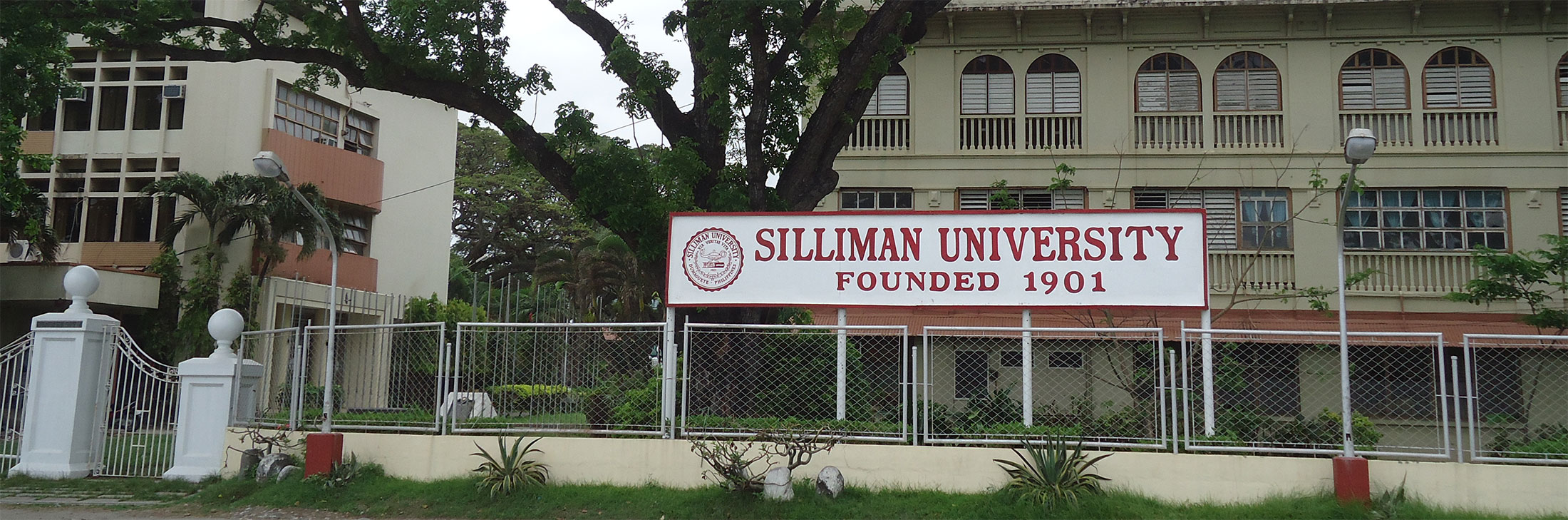
SU Statement on the Deadlock of the 2026 Collective Bargaining Agreement Negotiations
Guiding Responsibilities
Silliman University recognizes the responsibility of the Silliman University Faculty Association (SUFA) to advocate for the welfare and economic interests of its members. While acknowledging the economic concerns of its faculty, the University must also uphold its broader responsibility to its entire workforce, its students, and the wider Silliman community. This requires ensuring that financial commitments made through collective bargaining are equitable and sustainable, taking into account their long-term implications for the welfare of all University personnel, the affordability and quality of education, and the continued fulfillment of the University’s mission.
Overview of Negotiations
The University has offered a range of economic provisions in addition to the proposed across-the-board monthly salary increases. During the negotiations, however, discussions focused largely on the proposed across-the-board salary increase, leaving several other significant economic proposals without thorough consideration.
Notwithstanding the remaining differences, the parties were able to reach agreement on certain provisions. These include an increase in the annual rice allowance from ₱12,100 to ₱15,000 in the first year, ₱16,000 in the second year, and ₱17,000 in the third year. The parties likewise agreed on a new annual allowance of ₱1,700 to support faculty members’ professional enhancement activities.
These are on top of the benefits already enjoyed by qualified faculty members, which are generous compared with those offered by other universities.
Faculty Benefits Overview
- Health Maintenance Organization (HMO) coverage of up to ₱350,000
- 13th-month pay
- 14th-month pay/PEI incentives
- One-month extra days’ pay for faculty of the School of Basic Education
- Life insurance
- Retirement benefits (University fully assumes the cost without employee contribution, with a 1.04 retirement pay multiplier applied to the number of years of service upon retirement)
- Educational benefits for faculty members and their qualified beneficiaries through tuition and school fee discounts of up to 100%, which may be availed of by up to four (4) dependents at a time
- Government-mandated benefits
- Increases in the across-the-board (ATB) salary rate also result in corresponding increases in benefits such as 13th- and 14th-month (PEI) pay, retirement benefits, and life insurance
- Qualified employees are entitled to up to 30 days of paid leave, apart from other applicable leave benefits
- This results in an average ratio of benefits to basic pay of 56.25%.
Financial Context and Considerations
SUFA has cited the University’s reported Excess of Revenues over Expenses, particularly the University’s comprehensive income, in support of its economic position. It is important, however, to understand these figures in their proper financial context. The University’s comprehensive income is consolidated and reflects results from various activities and sources, including academic operations, auxiliary, commercial, investment activities, among others. Comprehensive income should not be equated with cash that is immediately and freely available for recurring expenditures. A portion of reported comprehensive income may consist of non-cash or unrealized gains and other accounting adjustments.
Similarly, the size of the University’s fund balances should not automatically be interpreted as an equivalent amount of unrestricted and readily available cash. The nature of these funds—including donor or legal restrictions, institutional commitments, liquidity requirements, and the specific purposes for which resources are maintained—must be taken into account when assessing the University’s capacity to undertake additional recurring financial obligations.
As a higher education institution, educational operations constitute the University’s core activity. While academic operations generate the largest share of the University’s operating revenues, their financial performance must also be viewed against the substantial cost of delivering education.
Academic Operations and Financial Performance
As shown in the Table below, for the past four (4) years, the cost of academic operations has exceeded the income generated from those operations, resulting in a cumulative academic operating deficit of approximately ₱221.85 million.
| SY 2022-2023 per FS |
SY 2023-2024 per FS |
SY 2024-2025 per FS |
SY 2025-2026 per FS |
|
|---|---|---|---|---|
| Gross Educational Income | ₱820,557,905.00 | ₱825,952,417.00 | ₱939,676,347.99 | ₱745,598,474.00 |
| Total Academic Expenses | ₱849,198,406.38 | ₱867,209,599.50 | ₱989,040,145.42 | ₱848,188,698.00 |
| Excess (Deficiency) from Academic Operations | (₱28,640,501.38) | (₱41,257,182.50) | (₱49,363,797.43) | (₱102,590,224.00) |
| Total Comprehensive Income (Before Tax) | ₱116,924,327.00 | ₱141,553,661.00 | ₱116,054,879.00 | ₱99,061,300.00 |
This means that revenues generated from non-academic activities have continued to supplement the University’s core academic operations and help support salaries and employee benefits, scholarships and student assistance, facilities and infrastructure, technology investments, and the University’s overall operational continuity.
University Workforce and Stewardship
Silliman University is responsible for more than 800 employees, apart from part-time personnel and individuals serving under other non-permanent engagements. Its workforce includes faculty members as well as administrative, professional, technical, utility, clerical, student services, and other personnel whose collective work enables the University to fulfill its educational mission.
The welfare of the faculty is important to the University. At the same time, the University has a responsibility to ensure that financial commitments made for one sector of its workforce do not compromise its capacity to meet its obligations to the rest of its employees, its students, and the institution as a whole.
Collective bargaining, therefore, requires the University to consider not only what it may be able to provide today, but also what it can responsibly and sustainably provide throughout the life of the agreement and beyond.
Recurring salary and benefit commitments become continuing institutional obligations. They must be evaluated against the University’s recurring revenues, operating requirements, commitments to all employees, student affordability, and the resources necessary to maintain and improve the quality of education.
Commitment to Sustainable Agreement
The University’s position in the negotiations is therefore not a rejection of the legitimate aspirations of its faculty. Rather, it reflects the University’s responsibility to balance those aspirations with its equally important obligations to its students, other employees, and the long-term sustainability of the institution.
The University remains hopeful that an agreement can be reached that recognizes the contributions of its faculty while safeguarding the interests of the entire Silliman community and the sustainability of the University's mission for the years ahead.
For Inquiries & Further Information
Silliman University Administration
Dumaguete City, Philippines
Silliman University