Edilberto & Edith Tiempo Creative Writing Center joins First Philippine Creative Writing Forum
Silliman University (SU)’s Edilberto and Edith Tiempo Creative Writing Center (CWC) took part in the First Philippine Creative Writing Forum held on November 19–21, 2025, at Microtel by Wyndham, UP Technohub, which gathered institutions nationwide to discuss approaches, practices, and standards in teaching creative writing in academic settings.
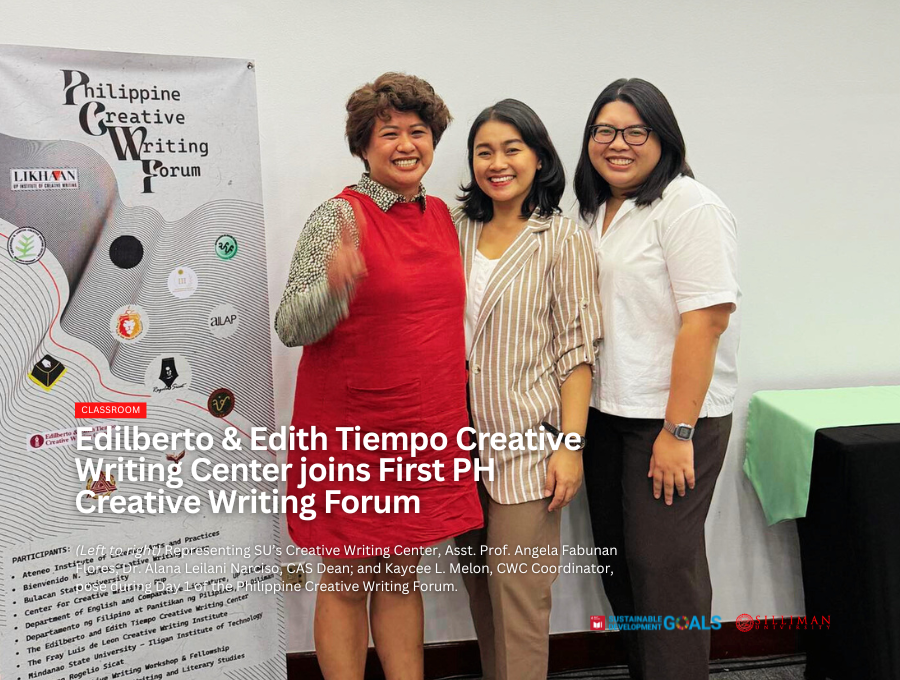
Representing SU were College of Arts and Sciences (CAS) Dean Dr. Alana Leilani C. Narciso, CWC Coordinator Kaycee L. Melon, and Creative Writing faculty member Asst. Prof. Angela Fabunan Flores.
The forum, organized by the UP Likhaan Institute of Creative Writing, brought together university-based creative writing programs and workshops for a collective exchange of ideas, resources, and expertise aimed at strengthening creative writing as an academic discipline and career path.
Participating institutions included the Ateneo Institute of Literary Arts and Practices, Bienvenido N. Santos Creative Writing Center, Bulacan State University, Center for Creative Writing–PUP, UP Diliman’s Department of English and Comparative Literature and Departamento ng Filipino at Panitikan ng Pilipinas, the Fray Luis de León Creative Writing Institute, Mindanao State University–Iligan Institute of Technology, Palihang Rogelio Sicat, Pamiyabe: Creative Writing Workshop & Fellowship, and the UST Center for Creative Writing and Literary Studies.
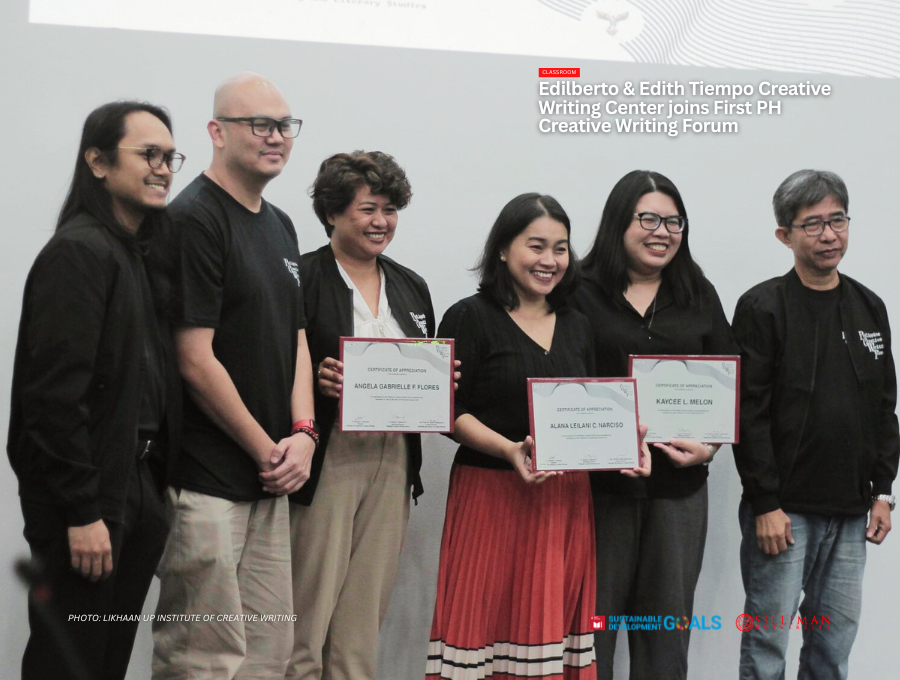
(Left to right) Prof. Rex Nepomuceno, Deputy Director of Likhaan: UP Institute of Creative Writing (UP ICW); Dr. Vladimeir B. Gonzales, Director of Likhaan: UP Institute of Creative Writing (UP ICW); Asst. Prof. Angela Fabunan Flores, Dr. Alana Leilani Narciso, and Kaycee L. Melon from SU’s Edilberto & Edith Tiempo Creative Writing Center; and Dr. Romulo P. Baquiran Jr., Director of the 1st Philippine Creative Writing Forum, Likhaan: UP Institute of Creative Writing (UP ICW), pose during the presentation of certificates to the participants.
The three-day forum featured five sessions, beginning with presentations of institutional workshop histories, followed by two breakout discussions comparing program models and reflections. These sessions culminated in presentations of group findings and a final synthesis outlining plans for future iterations of the forum.
Narciso presented her paper, “The Good Things First: The SUNWW and the Quiet Labor of Nation,” which revisits the history, pedagogy, and cultural labor of the Silliman University National Writers Workshop (SUNWW), the first and longest-running creative writing workshop in Asia.
Drawing on archival records and alumni testimonies, Narciso underscores the SUNWW’s role in decentralizing literary production and shaping the Philippine literary imagination from the South.
Her presentation highlighted how the Workshop, founded by Edith and Edilberto Tiempo, evolved from a provincial initiative into a national and transnational institution that has mentored generations of writers.
While the Workshop was originally patterned after the Iowa Writers Workshop, Narciso explained that alumni have repurposed its methods to nurture regional voices, ethical literary engagement, and quiet activism.
She further emphasized the collaborative spirit of the gathering.
Topics covered included curriculum directions, support structures for creative writing programs, potential models provided by the University of the Philippines system, community-based engagements, interdisciplinary opportunities, and consultations on expectations for creative writing instruction and institutional support.
Narciso emphasized the collaborative spirit of the gathering.
“It was a good avenue to talk about creative writing and to share best practices. This is also a chance to build partnerships among different institutions,” she said, adding that the forum affirmed that “there is no single ‘center’ in the country’s literary arts landscape.”
Melon highlighted the value of the conversations that emerged.
“Somehow, it helped to see and understand where each institution stands in terms of operating our creative writing programs. There are challenges that are shared, such as funding, and concerns unique to our contexts,” Melon noted.
“For Silliman, the forum was a confirmation of the important space our institution occupies in the country’s literary arts scene,” she added.
Meanwhile, Flores shared that participating in the inaugural forum was meaningful for SU.
“It was an opportunity to share our renowned programs in the English and Literature Department, as well as our literary community here as a UNESCO City of Literature in Dumaguete City,” she explained.
The Philippine Creative Writing Forum aims to become a continuing platform for dialogue and collaboration among creative writing institutions, with future meetings set to further develop shared goals and strengthen the country’s creative writing ecosystem.


