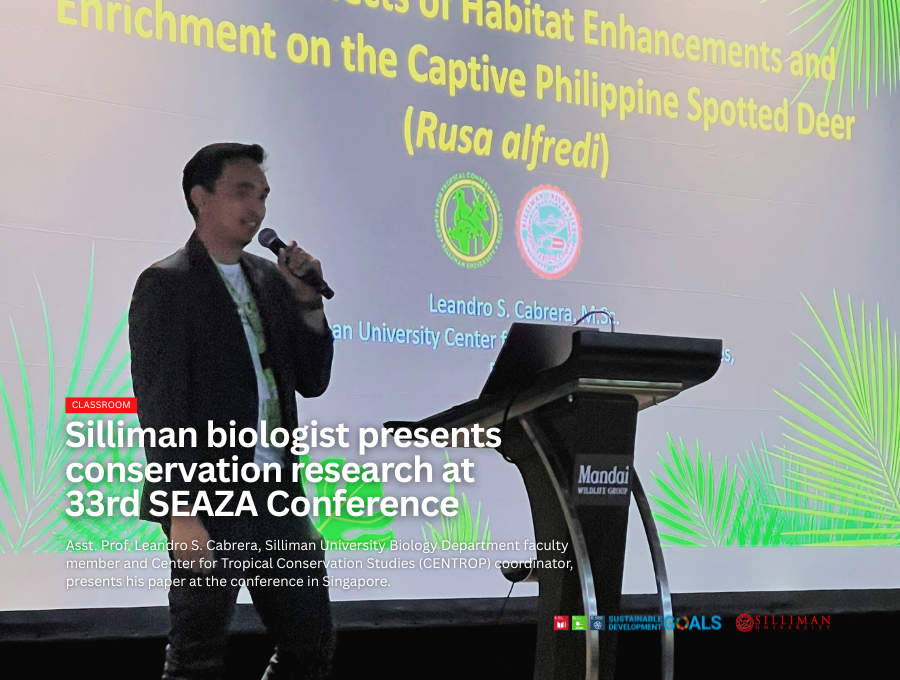
Silliman biologist presents conservation research at 33rd SEAZA Conference
Assistant Professor Leandro S. Cabrera, a faculty member of the Silliman University (SU) College of Arts and Sciences (CAS) Biology Department, participated in the 33rd Southeast Asian Zoos and Aquariums Association (SEAZA) Conference 2025, held from November 16 to 20, at the Mandai Wildlife Reserve in Singapore.
Cabrera presented his study, “Behavioral Effects of Habitat Enhancements and Enrichment on the Captive Philippine Spotted Deer (Rusa alfredi),” which focuses on welfare-enhancing interventions for the critically endangered species managed at SU CENTROP’s captive breeding facility in Palinpinon, Valencia.
His study highlighted the Philippine Spotted Deer, a critically endangered species endemic to the Negros–Panay region and now surviving within only 5% of its historical range.
Cabrera’s research emphasized that introducing visual barriers and regular enrichment activities increased physical activity among the deer, helped maintain ideal body condition scores, and reduced aggressive interactions within enclosures.
The study recommends incorporating these enrichment strategies into standard husbandry practices. It encourages further research on the long-term effects of these practices on social dynamics and stress reduction in ex-situ conservation settings.
SU’s CENTROP currently manages 47 individuals of the species, although breeding efforts have been temporarily paused to prioritize animal welfare due to spatial and resource limitations.
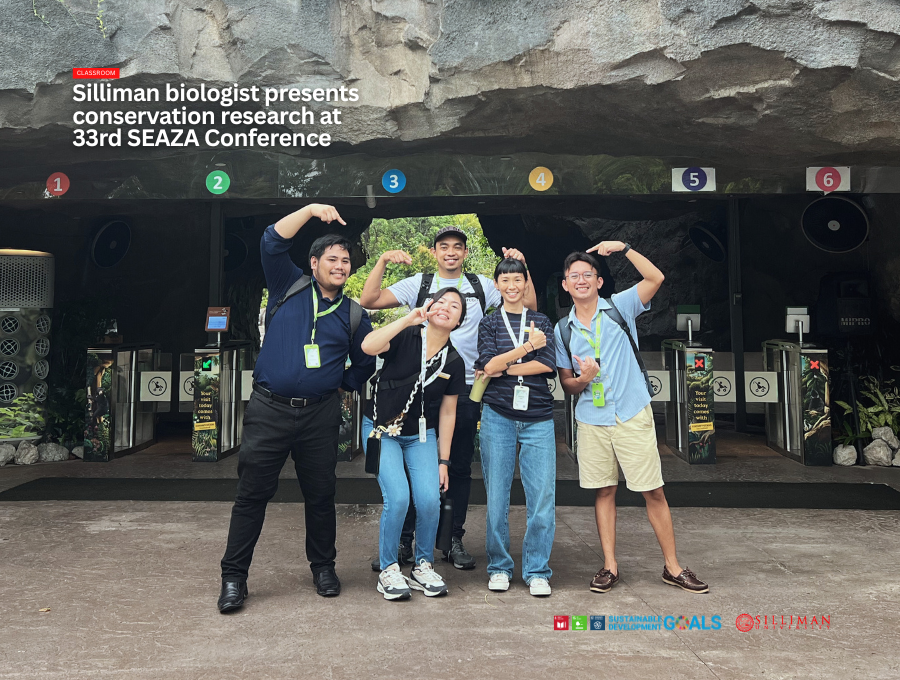
Cabrera and representatives from SU CENTROP & Talarak Foundation pose with the rangers of Rainforest Wild Asia in Mandai Wildlife Reserve.
The SEAZA Conference is a key event where conservation specialists from across ASEAN share research, best practices, and strategies on conservation, animal welfare, species management, and education.
Hosted this year by Mandai Wildlife Reserve, the conference aims to strengthen biodiversity conservation and public awareness through collaboration among zoo and aquarium institutions in Southeast Asia.
The 2025 edition featured keynote sessions, a pre-conference and post-conference workshop, and activities highlighting the host institution’s design and management strategies.


