
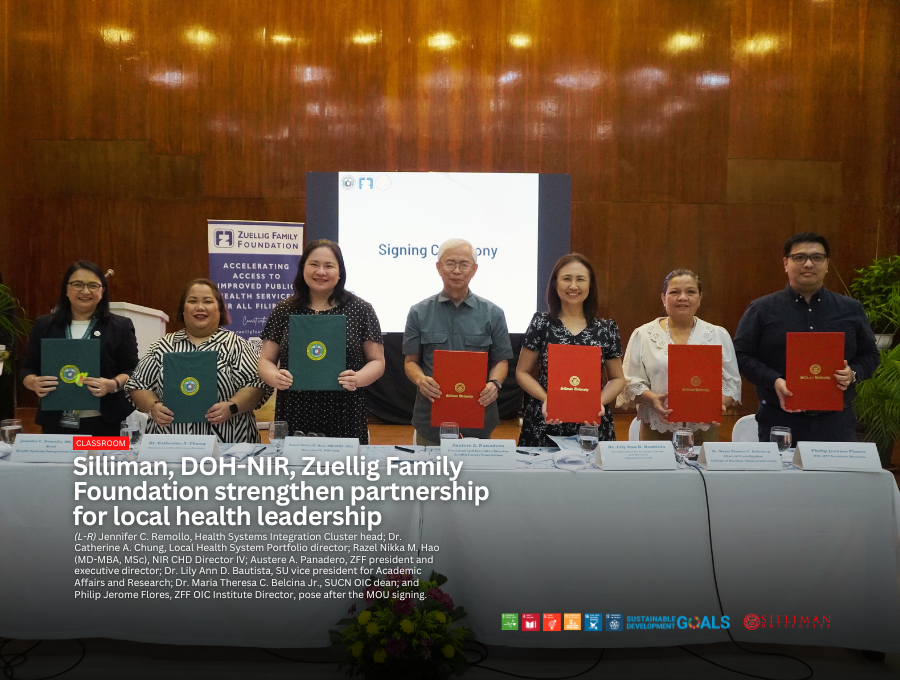
Silliman University (SU), the Department of Health–Negros Island Region Center for Health Development (DOH-NIR CHD), and the Zuellig Family Foundation (ZFF) reaffirmed their commitment to strengthening local health leadership and governance through the signing of two Memoranda of Understanding (MOUs) on July 3, 2026, at the SU Multipurpose Room.
The ceremony formalized the partnership between the DOH-NIR CHD and ZFF and the continuing collaboration between SU and ZFF, laying the groundwork for the implementation of the Bayang Malusog Program across the newly established Negros Island Region (NIR).
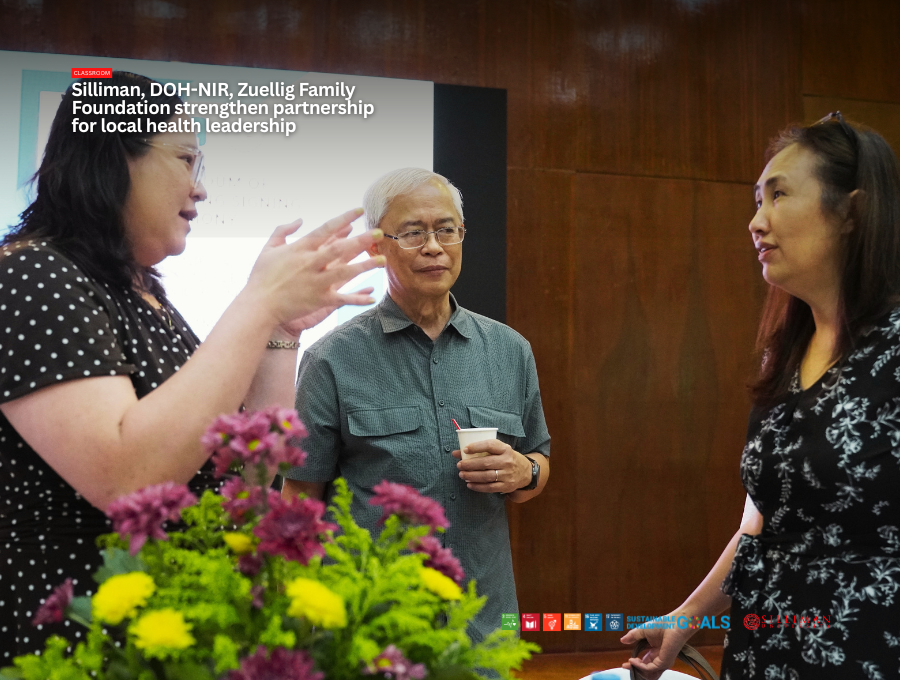
(L-R) Dr. Razel Nikka M. Hao, Director IV of the DOH-NIR Center for Health Development; Austere A. Panadero, ZFF President and Executive Director; and Dr. Lily Ann D. Bautista, Vice President for Academic Affairs and Research, share a moment before the memoranda signing.
Central to the partnership is the implementation of the Leadership Development Program for Universal Health Care (LDP-UHC), which equips municipal mayors, municipal health officers, and Universal Health Care (UHC) team members with practical skills in strategic leadership and management. Participants will undergo structured learning modules supported by coaching, mentoring, and technical assistance.
The agreement also establishes the ZFF Bayang Malusog Community of Practice, a platform where local government leaders, health professionals, and regional stakeholders can exchange best practices, innovations, and lessons in Universal Health Care and primary health care implementation.
The initiative seeks to strengthen local health systems through leadership development, governance improvement, and support for the implementation of Universal Health Care (UHC).
The signing builds on more than a decade of collaboration between SU and ZFF under the Health Leadership and Governance Program (HLGP).
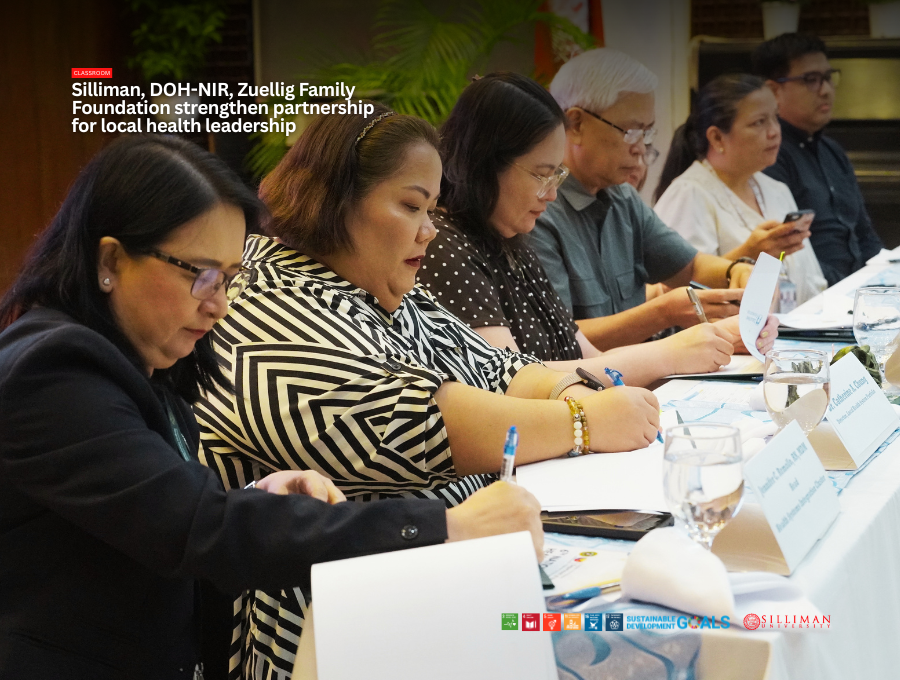
Members of DOH-NIR and ZFF sign the Memorandum of Understanding.
Since becoming a ZFF academic partner in 2015, SU has helped build the capacity of local government leaders through leadership development and academic engagement. Eighteen faculty members from the College of Nursing, Department of Nutrition and Dietetics, and Department of Public Administration have completed foundational Health Leadership and Governance training, while seven faculty members continue to serve as facilitators and coaches.
Together with the Department of Health–Center for Health Development Central Visayas, the partnership has supported the implementation of the Municipal Leadership and Governance Program (MLGP) in 35 municipalities.
In her message, Dr. Catherine A. Chung, Director of ZFF’s Local Health Systems Portfolio, described the ceremony as the beginning of a shared commitment rather than merely the signing of an agreement.
“Today’s event is more than the signing of a document. It marks the beginning of a shared commitment to strengthen local health systems and improve the health and well-being of every family in the Negros Island Region,” Chung said.
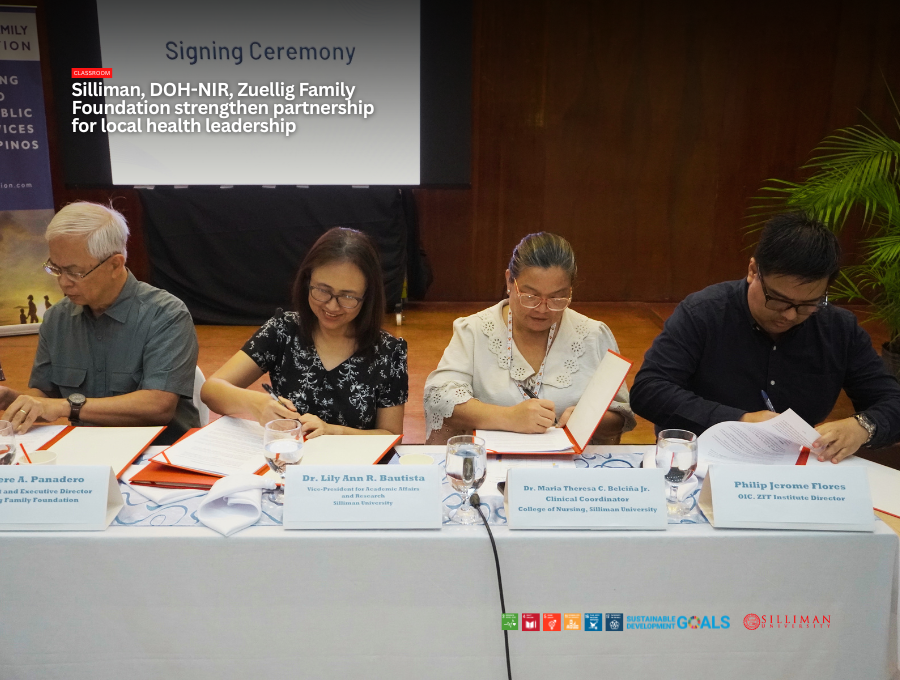
Members of SU and ZFF sign the Memorandum of Understanding.
She noted that the Bayang Malusog Program builds on ZFF’s years of experience implementing the Health Leadership and Governance Program nationwide, emphasizing that sustainable health improvements depend on leaders who can unite stakeholders, strengthen governance, and translate policies into meaningful action at the local level.
Providing context for the partnership, Philip Jerome Flores, Officer-in-Charge of the ZFF Institute, traced the foundation’s journey in health leadership development. Since 2008, ZFF has worked to strengthen the capacity of local government units through the Health Change Model and Bridging Leadership Framework, collaborating closely with academic institutions to ensure leadership programs remain grounded in local realities.
Flores highlighted that by 2019, the Health Leadership and Governance Program had completed two full implementation cycles involving 774 municipalities, 28 cities, and 27 provinces nationwide, adding that the foundation’s renewed strategy continues to expand academic partnerships, recognizing universities as vital partners in strengthening knowledge systems that sustain health leadership initiatives.
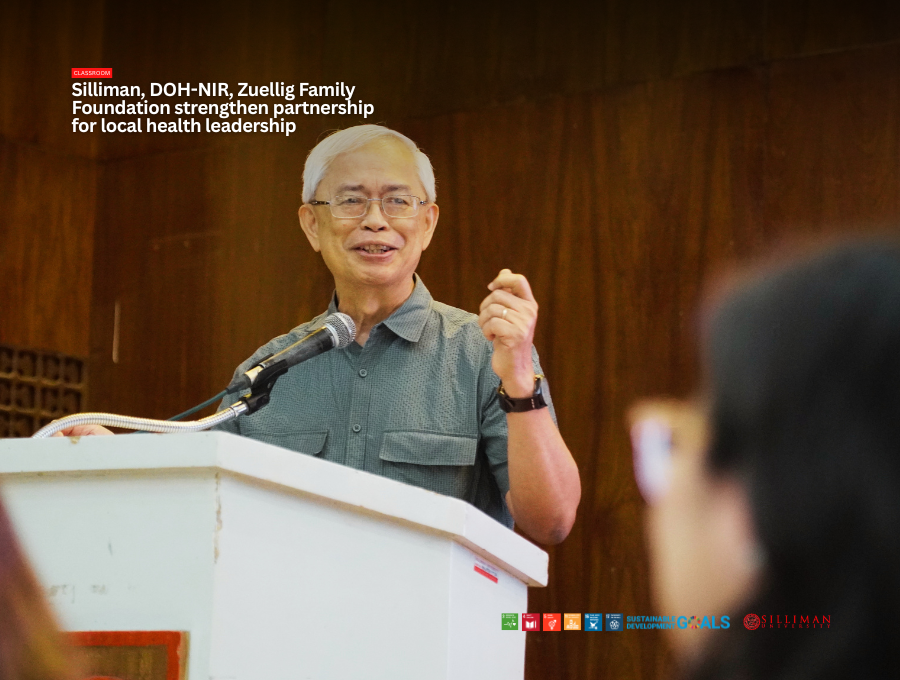
Panadero talks about the vital role of academic institutions like SU in generating health research.
ZFF President and Executive Director Austere A. Panadero underscored the foundation’s shift from investing primarily in health infrastructure to investing in people and leadership.
He encouraged future trainers and coaches to remain adaptive to local contexts, noting that no single template can address the varying realities of local governments.
Panadero also emphasized the important role of universities in generating research, improving curricula, and developing future leaders capable of addressing governance, financing, and policy challenges in health systems.
Looking beyond the Bayang Malusog Program, Panadero also expressed interest in expanding collaboration with SU in areas such as early childhood development, nutrition, and adolescent health.
For the Department of Health, Dr. Razel Nikka M. Hao, Director IV of the DOH-NIR Center for Health Development, said the next phase of Universal Health Care depends less on identifying new solutions and more on effectively implementing existing policies at the local level.
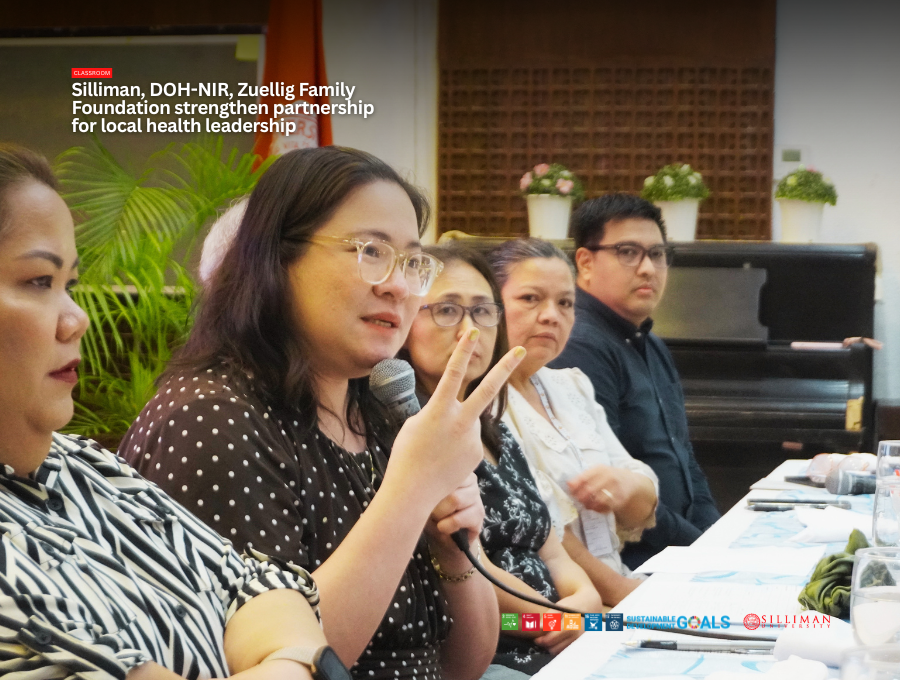
Hao responds to a question during the Q&A forum with members of the local media.
“The next chapter of Universal Health Care will not be written about discovering new ideas. The next chapter is written by implementing the ones that we already have,” Hao said.
She stressed that successful implementation rests on the leadership of mayors, municipal health officers, local finance officers, health workers, and other local stakeholders, making investments in local leadership essential to improving health outcomes.
Representing SU, Dr. Lily Ann D. Bautista, vice president for Academic Affairs and Research, affirmed the University’s commitment to advancing equitable and inclusive healthcare through education, research, and community engagement.
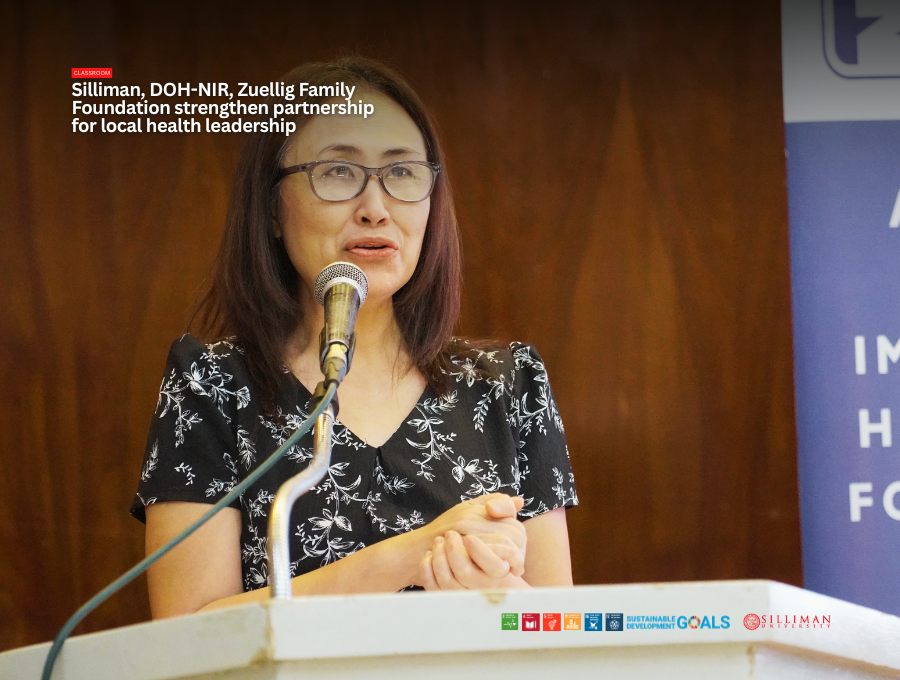
Bautista affirms SU’s commitment to support.
Bautista said SU will continue developing trainers, coaches, and facilitators to support the program while working to institutionalize health leadership initiatives across multiple academic disciplines beyond the health sciences.
She also committed to strengthening research and innovation to better understand community needs and generate evidence that will inform health interventions.
The Bayang Malusog Program will continue the leadership development model established under the HLGP.
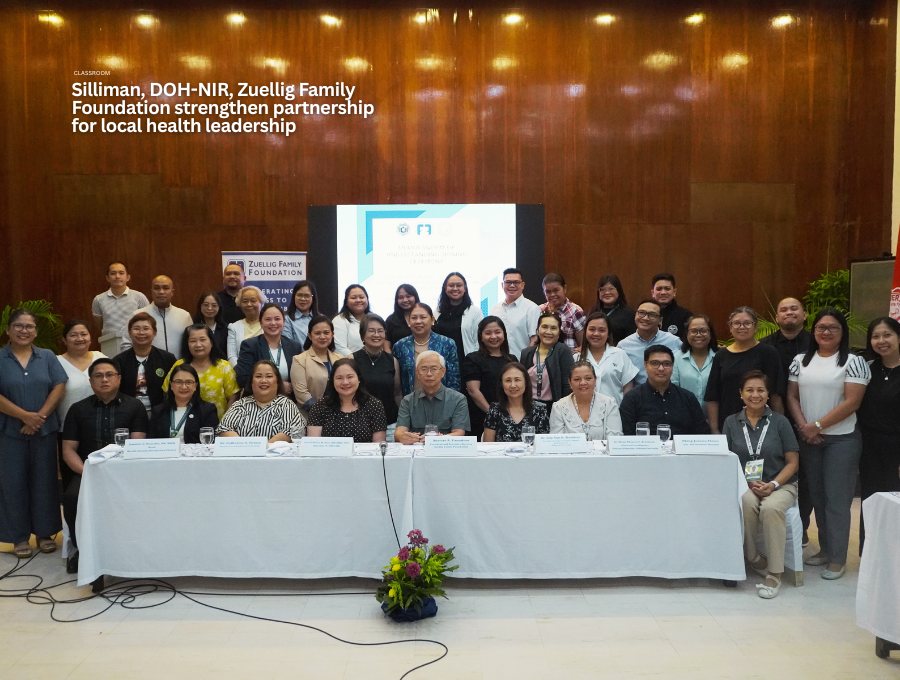
Members of SU, DOH-NIR, and ZFF gather for a photo after the ceremony.
Anchored in the Bridging Leadership Framework and guided by the World Health Organization’s six health system building blocks, the program equips local government leaders to strengthen governance, engage stakeholders, improve primary healthcare, and develop responsive local health systems.
With the establishment of the Negros Island Region, the renewed partnership among the DOH-NIR CHD, ZFF, and SU is expected to strengthen regional coordination and support municipalities in building healthier, more resilient communities through effective local leadership.