SU-GForest Project showcases mangrove research at international conference in Japan
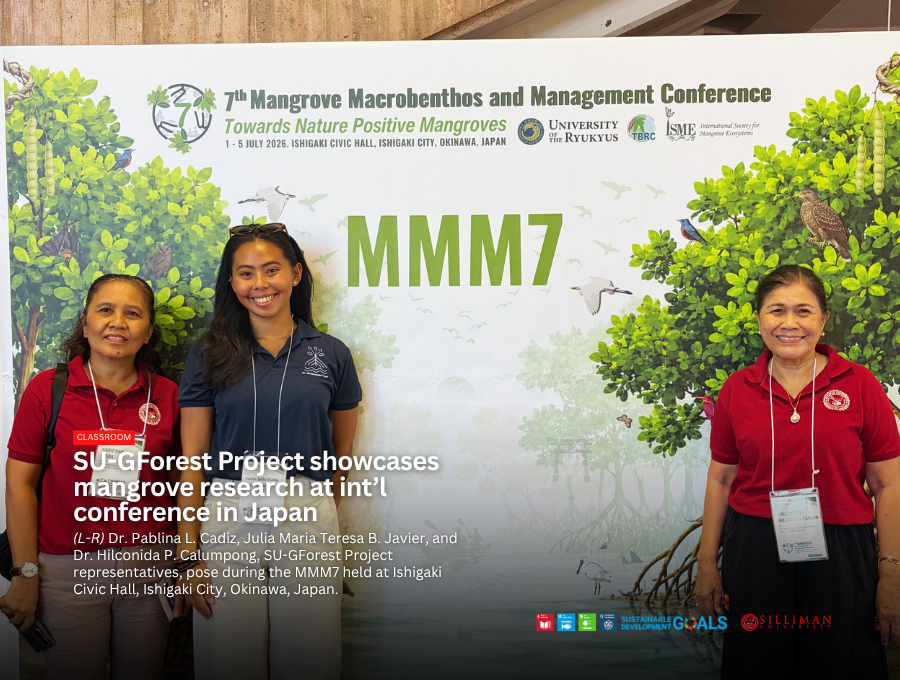
The SU-GForest Project of Silliman University (SU) presented three research studies on mangrove carbon sequestration and coastal ecosystem restoration at the 7th Mangroves Macrobenthos and Management Conference (MMM7), held July 1–5, 2026, at the Ishigaki Civic Hall in Ishigaki City, Okinawa, Japan.
Representing the project were Prof. Emeritus Hilconida P. Calumpong, Project coordinator; Pablina L. Cadiz, Blue Carbon specialist; and Julia Maria Teresa B. Javier, Project staff.
The team shared their work through flash talks and poster presentations during the conference, which brought together researchers and practitioners from around the world to exchange new findings and advance strategies for mangrove conservation and management.
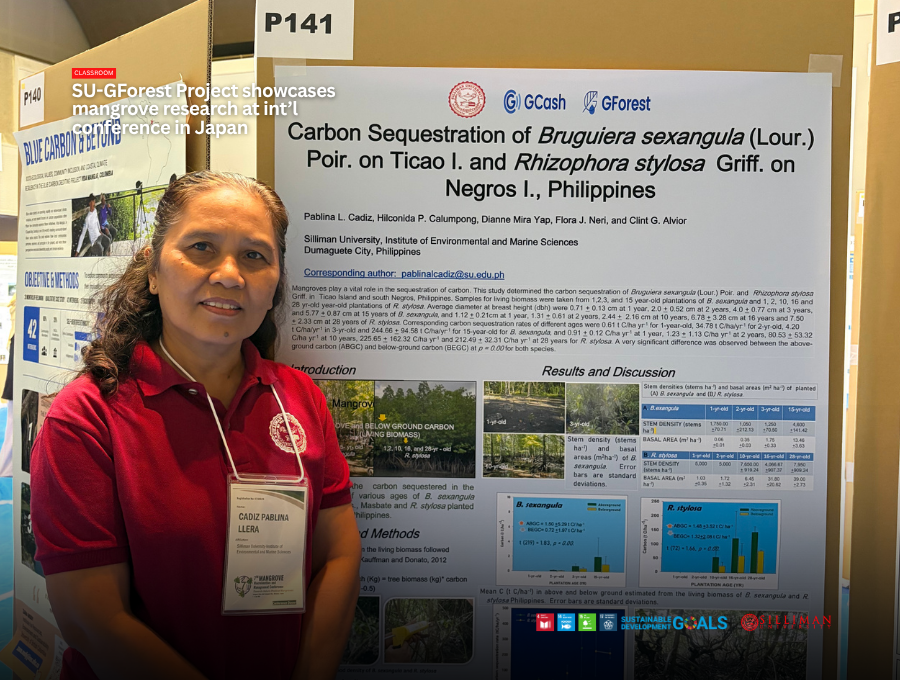
Cadiz presented “Carbon Sequestration of Bruguiera sexangula (Lour.) Poir. on Ticao Island and Rhizophora stylosa Griff. on Negros Island, Philippines,” co-authored with Calumpong, Dianne Mira Yap, Floramae J. Neri, and Clint G. Alvior.
The study examined carbon sequestration across different growth stages of Bruguiera sexangula and Rhizophora stylosa, demonstrating that carbon storage increases as mangrove plantations mature and highlighting the long-term value of mangrove rehabilitation in climate change mitigation.
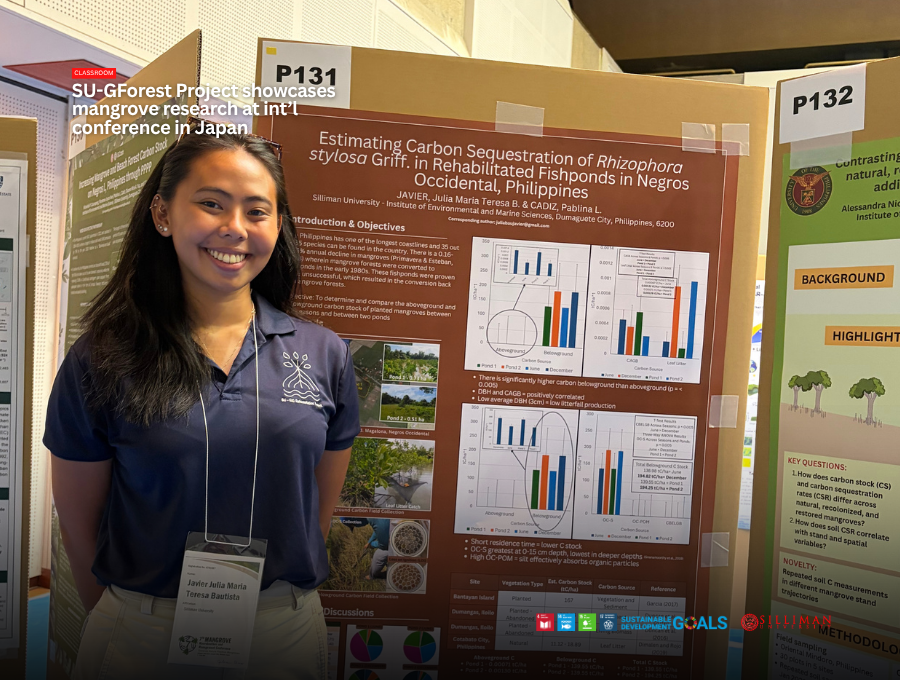
Javier and Cadiz also presented “Estimating Carbon Sequestration of Rhizophora stylosa Griff. in Rehabilitated Fishponds in Negros Occidental, Philippines,” which found that three-year-old Rhizophora stylosa plantations established in rehabilitated fishponds stored substantial amounts of carbon in living biomass, soil, particulate organic matter, and leaf litter, underscoring the potential of restoring abandoned fishponds as effective blue carbon ecosystems.
Meanwhile, Calumpong presented “Increasing Mangrove and Beach Forest Carbon Stock on Negros Island, Philippines through PPPP,” co-authored with Cadiz, Yap, Neri, and Alvior, highlighting the SU-GForest Project’s private-private-public partnership involving GCash, Silliman University, local government units, and people’s organizations to restore mangrove and beach forests across Negros Island.
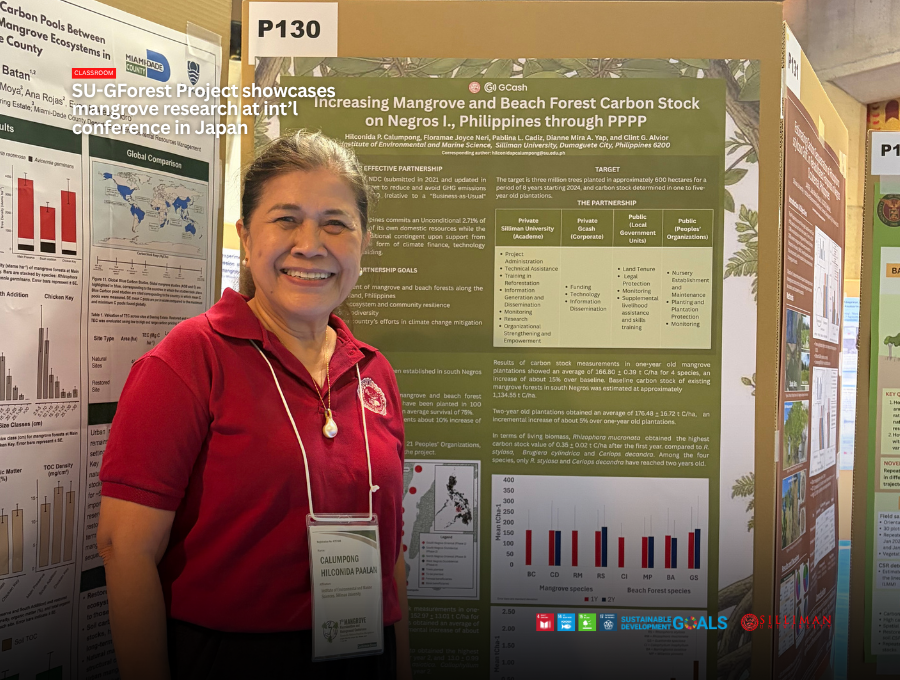
As of December 2025, the initiative had planted approximately 520,400 trees representing 34 species across 78 hectares, contributing to biodiversity conservation, enhanced coastal resilience, and increased carbon storage in support of the country’s climate goals.
These studies reinforce the importance of mangroves and beach forests in carbon sequestration, climate change mitigation, and coastal resilience.
Through its participation in MMM7, the SU-GForest Project contributed Philippine research and restoration initiatives to international discussions on the sustainable management of mangrove ecosystems while strengthening scientific collaboration with the global mangrove research community.


