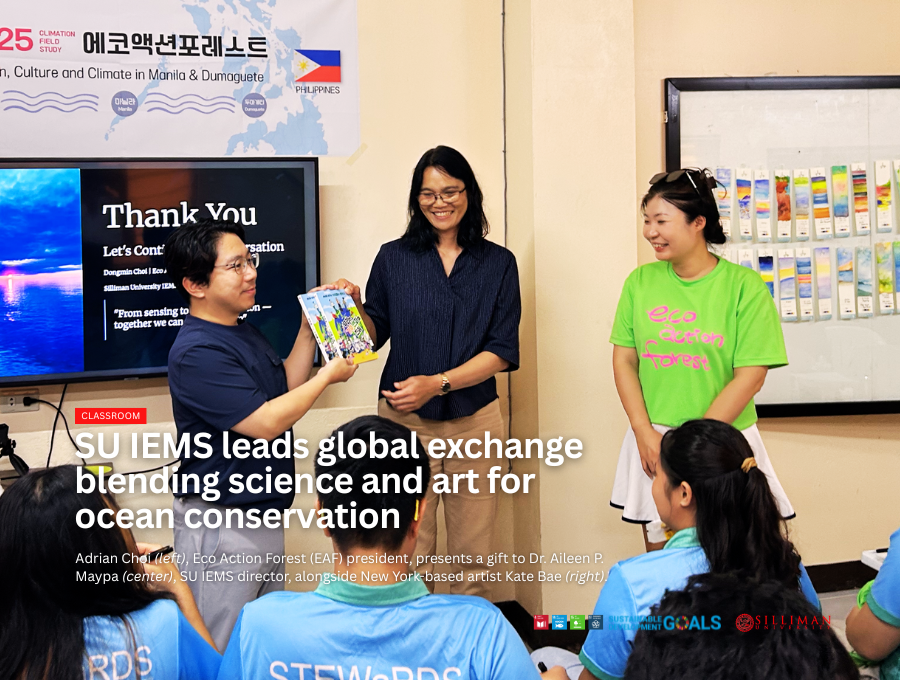
SU IEMS leads global exchange blending science and art for ocean conservation
The Silliman University (SU) Institute of Environmental and Marine Sciences (IEMS) took the lead in advancing ocean conservation dialogue through the IEMS–Eco Action Forest Exchange: Ocean Conservation (Stories and Learning Event) held on December 6, 2025 at the SU IEMS.
The exchange brought together 35 participants, including a three-member delegation from Eco Action Forest, a non-government organization based in Busan, South Korea.
Hosted by SU IEMS, the day-long exchange highlighted the institute’s expertise in marine science and its commitment to engaging students and partners in climate and ocean solutions.
It opened with a lecture series led by IEMS faculty, beginning with IEMS Director Dr. Aileen P. Maypa, a Pew Fellow in Marine Conservation, who presented “The Dumaguete Coast Marine Ecosystems, Biodiversity and Fishery: Challenges and Marine Conservation Efforts.”
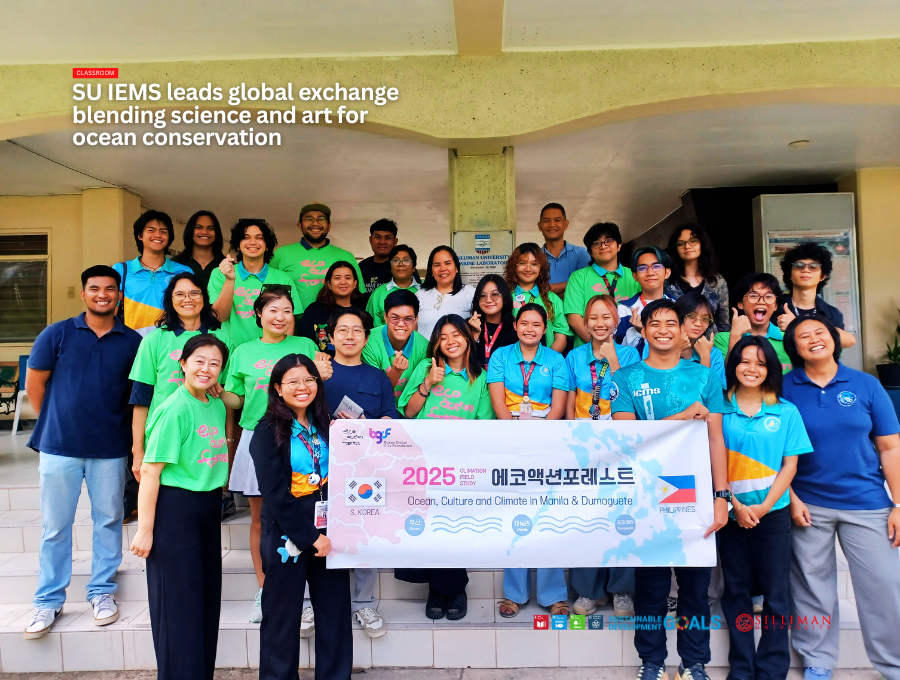
IEMS faculty, students, and staff pose with visitors from the Eco Forest Action, an NGO based in Busan, South Korea.
The series continued with presentations by Clarissa Reboton on coral conservation in Negros Island; Dr. Edna Sabater on whale and dolphin conservation in the Bohol Sea; Danielle Mark Fukuda on marine invertebrates of the Dumaguete Coast; Jean Utzurrum on shark conservation; and Theodore Bradshaw, President of the IEMS Student Council (STEWARDS), who shared student-led marine conservation initiatives.
Eco Action Forest President Adrian Choi, together with artist collaborators Kate Bae, a New York-based artist, and Hyo Jung Bea, a Jeju Island-based artist, presented the organization’s Ocean Climation Project.
The initiative promotes citizen science and innovative technology and art to gather basic ocean parameters, such as temperature, salinity, pH, and turbidity, critical for monitoring climate change impacts.
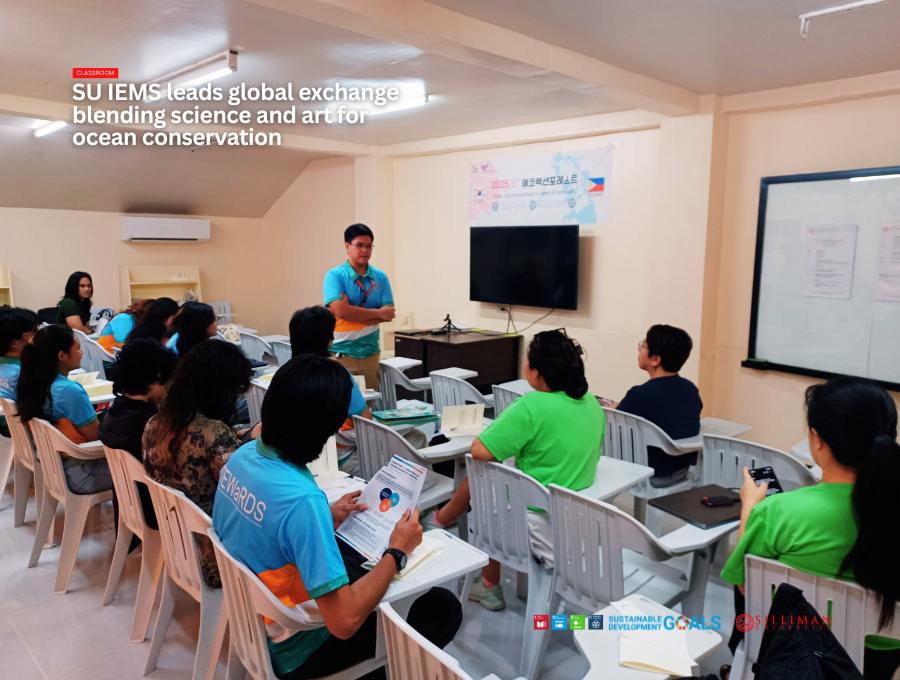
IEMS students introduce themselves during the workshop with the Eco Action Forest.
An interactive workshop followed, engaging Marine Biology and Environmental Science students in a hands-on “climation art” activity that demonstrated how environmental data can be interpreted through hues and watercolors using field palettes and brushes.
The exchange concluded with discussions on future project collaborations and a guided tour of IEMS facilities led by selected IEMS students.


