
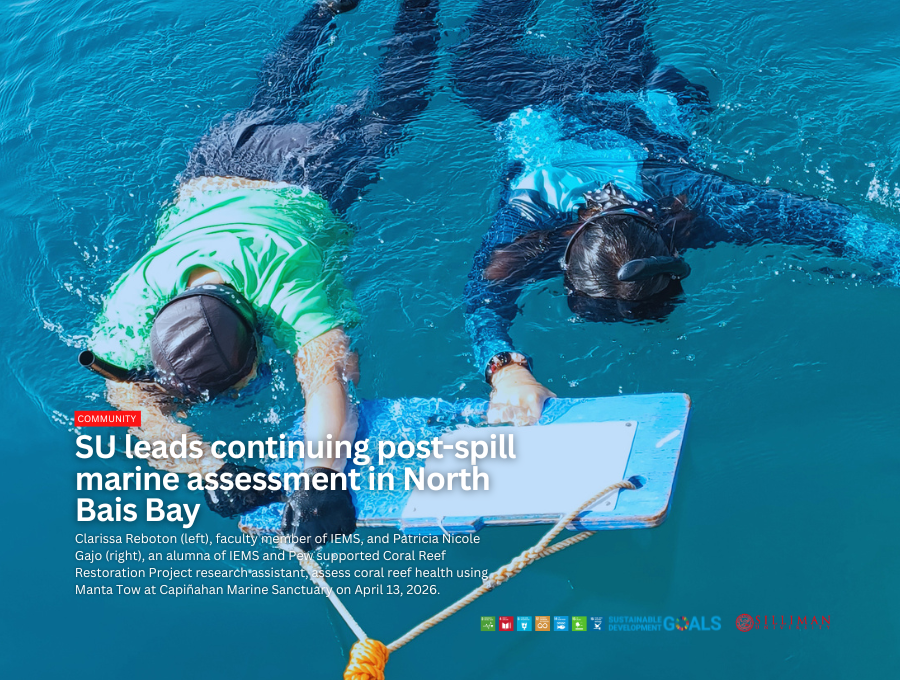
The Silliman University (SU) Institute of Environmental and Marine Sciences (IEMS) continued its post-spill environmental monitoring efforts with a field survey at the Capiñahan Marine Sanctuary on April 13, 2026, as part of a broader initiative to assess the impacts of the Universal Robina Corporation (URC) spent wash spill incident.
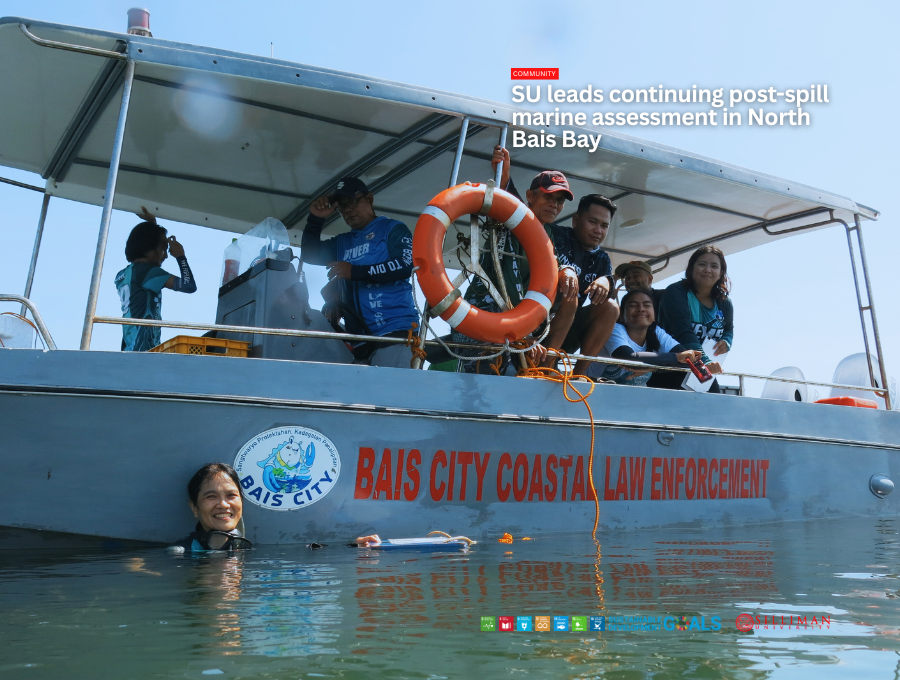
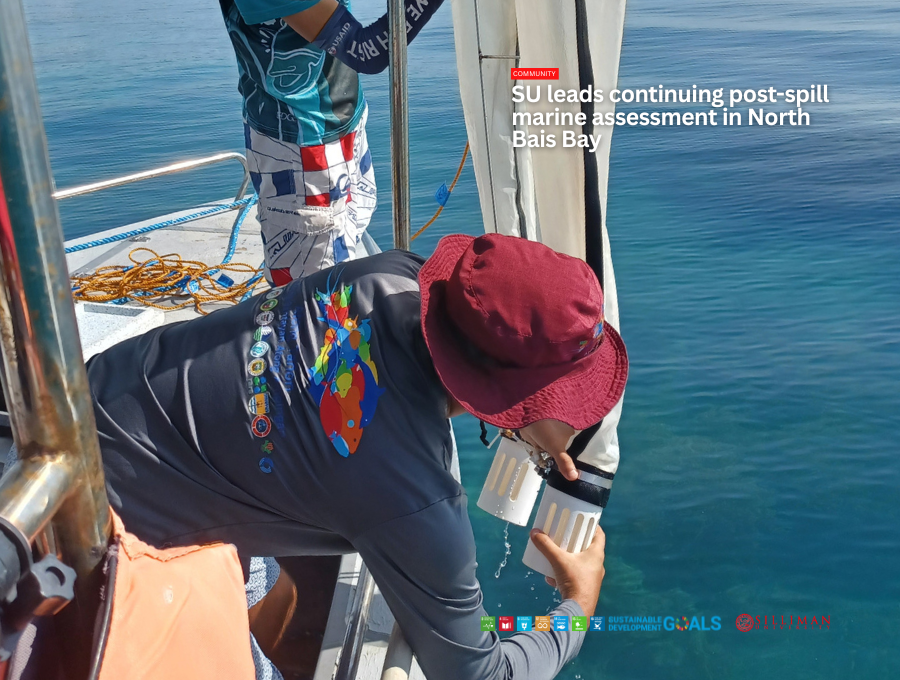
Conducted in collaboration with the Department of Environment and Natural Resources – Tañon Strait Protected Seascape (DENR-TSPS), the Philippine Coast Guard (PCG), and the Bais City Local Government Unit (LGU) through its Bantay Dagat, the activity involved a broad-scale habitat damage assessment within the marine sanctuary in North Bais Bay, Negros Oriental.
The SU IEMS team was led by its Director, Dr. Aileen Maypa, with support from Assistant Professors Clarissa Reboton and Danielle Mark Fukuda, along with several research assistants. Meanwhile, the DENR-TSPS team included Terence Mark Parvus and Maria Leoney Cagalawan, while the Philippine Coast Guard contingent was led by LTJG Rachel Zioness Deputado of the Marine Science Investigation Force (MSIF).
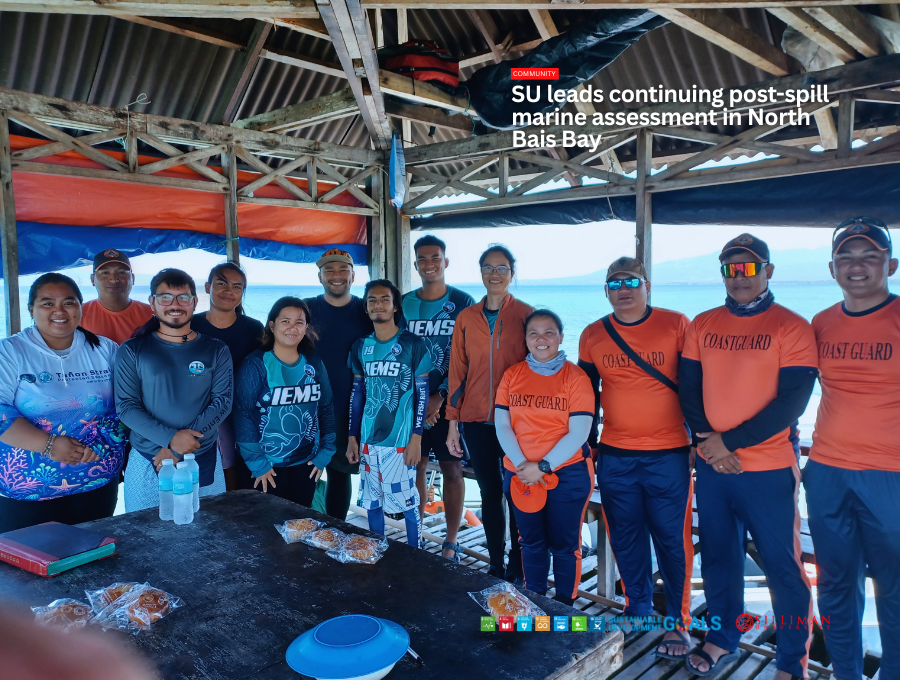
The survey forms part of a continuing multi-agency effort to monitor environmental conditions following the spent wash spill that began in October 2025. The April 13 fieldwork was supported by the Pew Fellowship for Marine Conservation of Maypa, DENR-TSPS, the PCG, K. Gervereau of the Big Blue Network, and the LGU of Bais City.
Located at the mouth of North Bais Bay, the Capiñahan Marine Sanctuary covers an estimated 54 hectares of coral reef habitat, with adjacent seagrass and algal communities. Although the sanctuary lies approximately 7 to 8 kilometers from the spill source at the URC wastewater pond, it was still within the affected area.
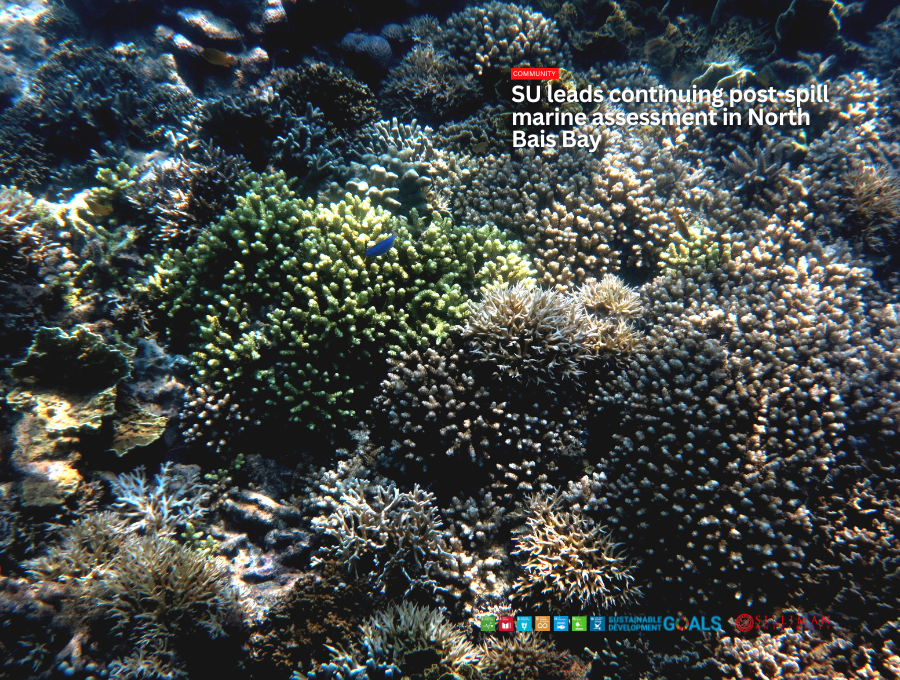
Preliminary findings from the broad-scale assessment using manta tow methods indicate that the coral reef remains generally healthy and intact. However, observations also revealed signs of past disturbance, including extensive rubble substrate that has since consolidated and become overgrown with corals. Interviews with local Bantay Dagat members attributed these conditions in part to the impacts of Typhoon Odette, which affected North Bais Bay in December 2021.
The relatively healthy condition of the reef is considered a positive sign, particularly amid reports of severe degradation and loss of seagrass and coral reef habitats in areas of North Bais Bay closer to the spill origin.
Maypa noted that the sanctuary may play a critical role in ecosystem recovery.
“We are hopeful that this reef can serve as a source of larvae and help repopulate the impacted areas within the bay, supporting the recovery of damaged reef systems,” she said.
At the same time, she emphasized the need for sustained action from both URC and the DENR Environmental Management Bureau (EMB) to address ongoing environmental threats.
Based on field observations, the spill does not appear to have been fully contained, as indicated by visible water discoloration near the URC wastewater pond.
Despite the incident, URC has since resumed operations following a cease-and-desist order previously issued by the DENR-EMB in response to the October 2025 spill.