SU Scientists, Partners Intensify Monitoring in North Bais Bay after URC Spill
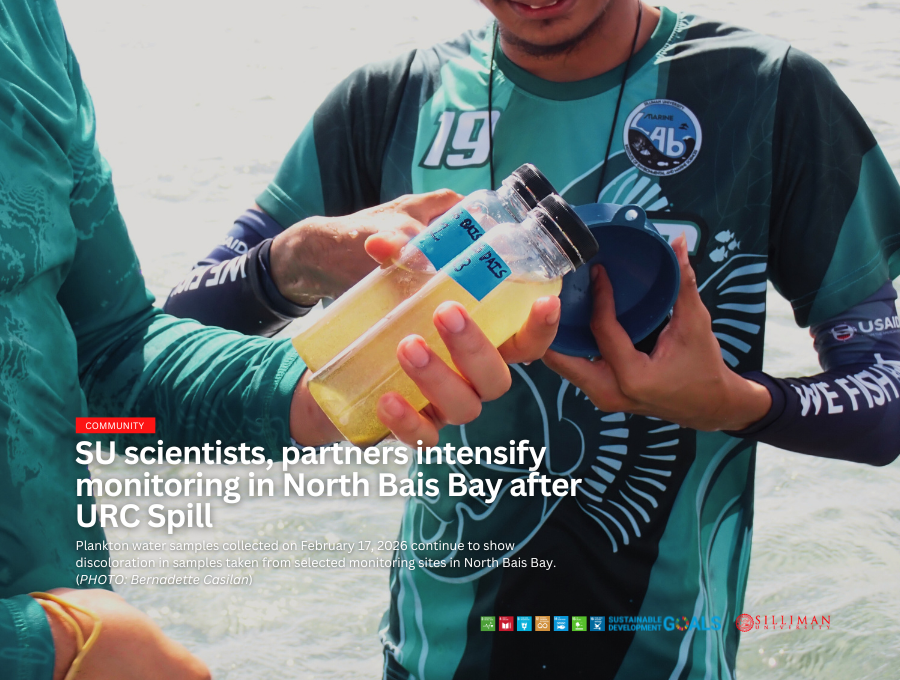
Scientists from Silliman University (SU) are continuing scientific monitoring efforts in North Bais Bay following the United Robina Corporation (URC) spent wash spill, conducting a joint field investigation with partner institutions and government agencies to assess its environmental impact.
Researchers from the university’s Institute of Environmental and Marine Sciences (IEMS) and the Silliman University Angelo King Center for Research and Environmental Management (SUAKCREM) joined scientists from Foundation University, working in partnership with the Department of Environment and Natural Resources – Tañon Strait Protected Seascape (DENR-TSPS) and the Philippine Coast Guard.
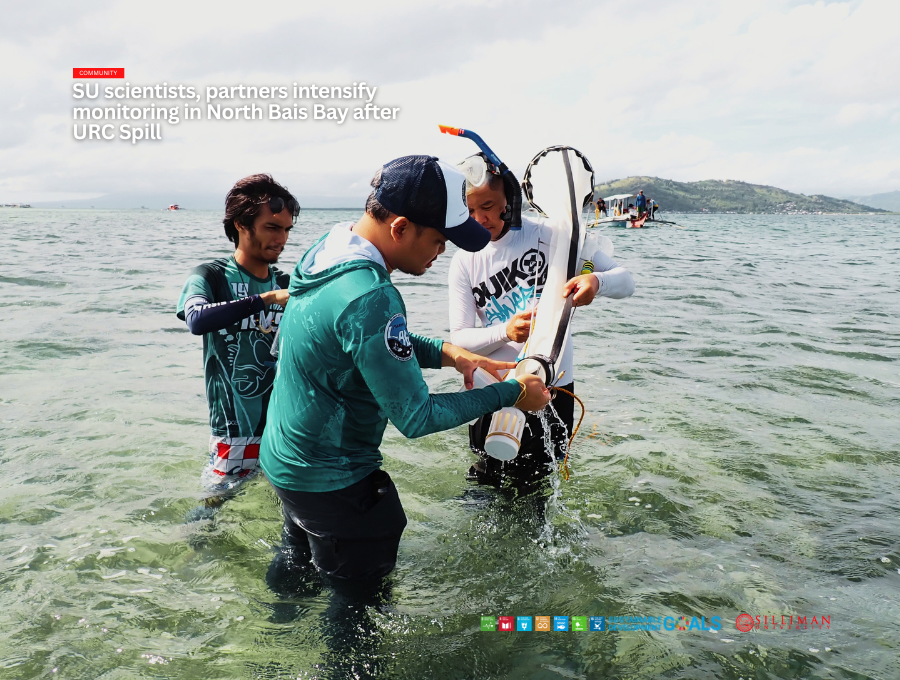
The latest field sampling was conducted on February 17, 2026 in North Bais Bay as part of the scientific response to the spill that began in late October 2025. Researchers stressed that findings from the field remain preliminary and are subject to laboratory validation.
The joint scientific assessment focused on examining plankton community structure, determining the potential presence of harmful algal blooms, and measuring key water quality parameters that influence the health of coastal ecosystems.
Leading the plankton investigation was Dr. Adonis Floren of IEMS, assisted by his research team, while water quality monitoring was headed by Dr. Robert S. Guino-o II, Director of SUAKCREM. They were joined by chemists Dr. Paulina Aspilla of Foundation University and Dr. Melchor Cerdania of the SU Chemistry Department.
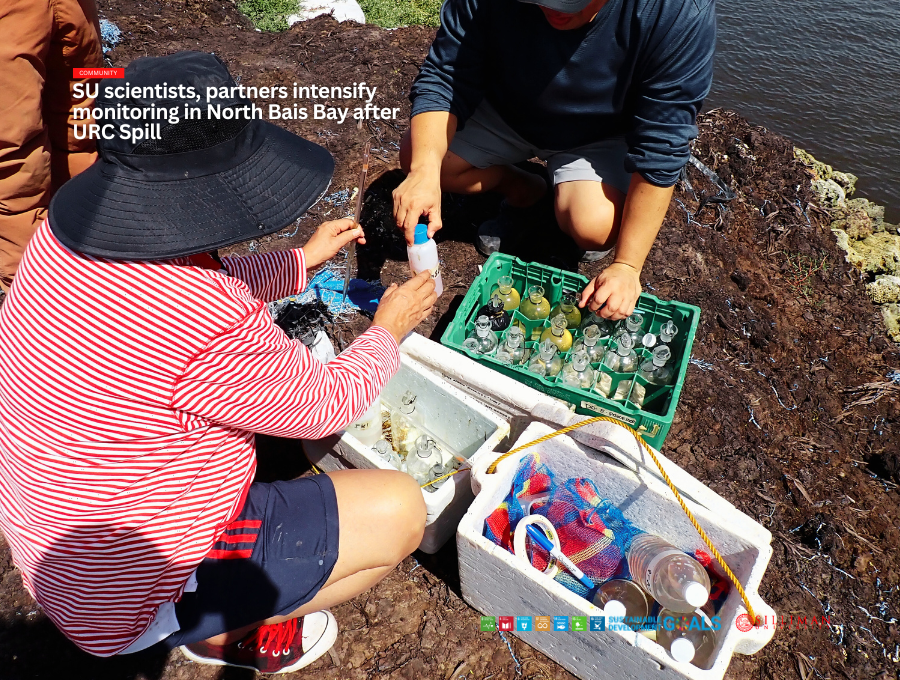
The February 17 survey marked the third water quality assessment conducted by SUAKCREM since the incident, following earlier sampling on November 1 and November 15, 2025.
Field observations during the most recent survey confirmed that the spent wash plume remains visibly present in the bay, extending approximately two hectares from the discharge source despite the repair of the wastewater pond dyke identified as the origin of the spill. Geographic mapping conducted by the IEMS GIS team documented the extent of the plume.
Scientists noted that spent wash effluent typically carries high organic loads and dark pigmentation, conditions that may reduce dissolved oxygen levels and limit light penetration in coastal waters. Such changes can affect plankton dynamics and place prolonged stress on nearby seagrass beds and coral reef ecosystems that support fisheries and coastal livelihoods.
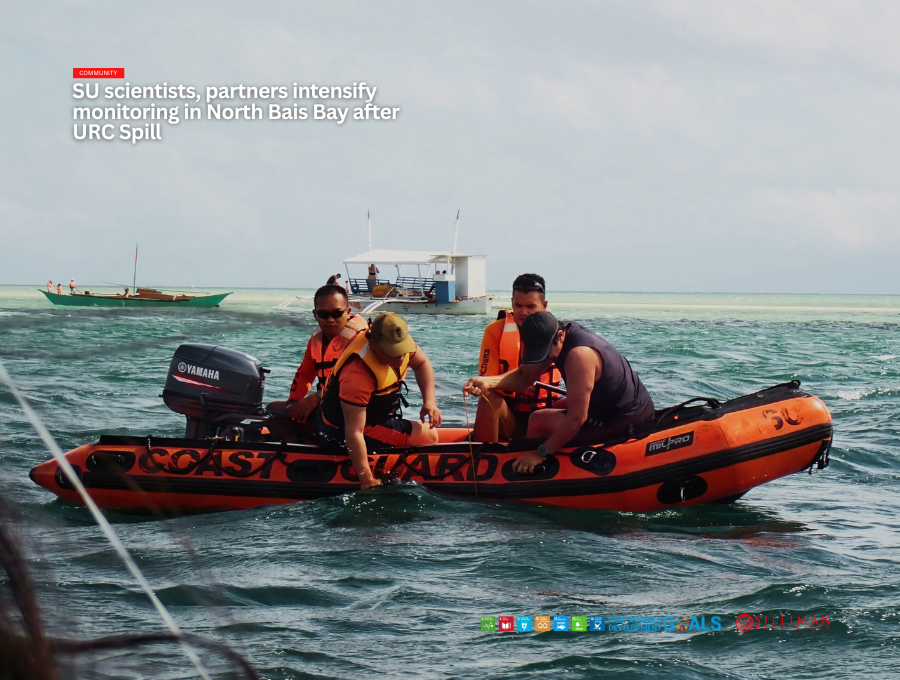
Researchers emphasized that laboratory analyses of collected samples are still ongoing and will undergo further validation before any final scientific conclusions are made.
Meanwhile, marine ecologists from IEMS, together with DENR-TSPS, are preparing for a broader habitat damage assessment scheduled in March to evaluate possible impacts on seagrass and coral reef areas and to inform future restoration strategies. (PHOTOS: Bernadette Casilan)


