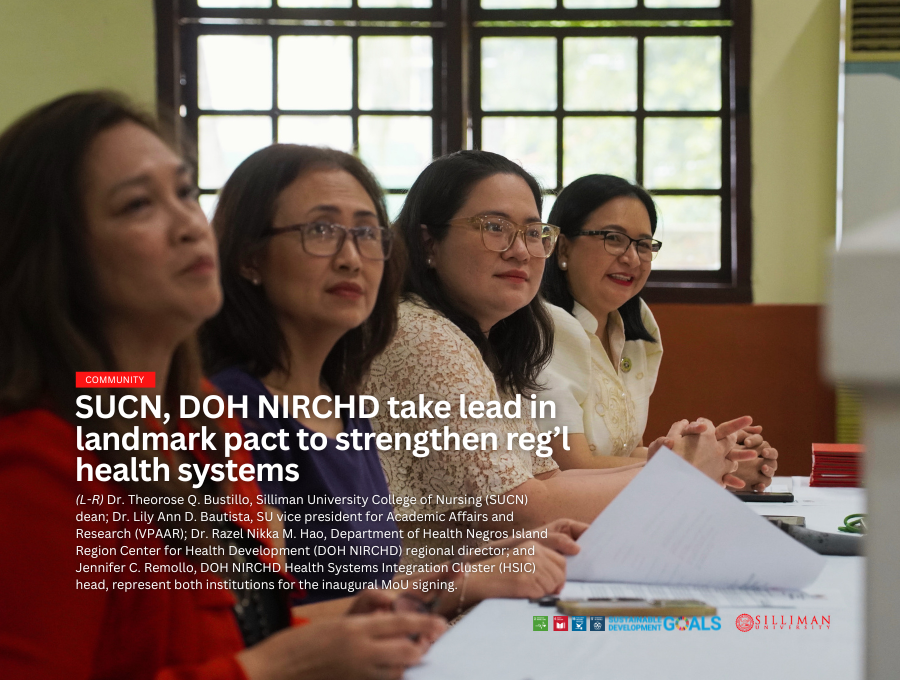
SUCN, DOH NIRCHD take lead in landmark pact to strengthen reg’l health systems
The Silliman University College of Nursing (SUCN) reinforced its role as a key driver of regional health systems strengthening following the signing of a Memorandum of Understanding (MoU) between Silliman University (SU) and the Department of Health Negros Island Region Center for Health Development (DOH-NIRCHD) on February 23, 2026, at SU Hall.
The partnership formalizes cooperation between the university and the regional health office to advance leadership, governance, health systems strengthening, and capacity-building initiatives aimed at improving health outcomes and enhancing service delivery performance among local government units across the Negros Island Region (NIR).
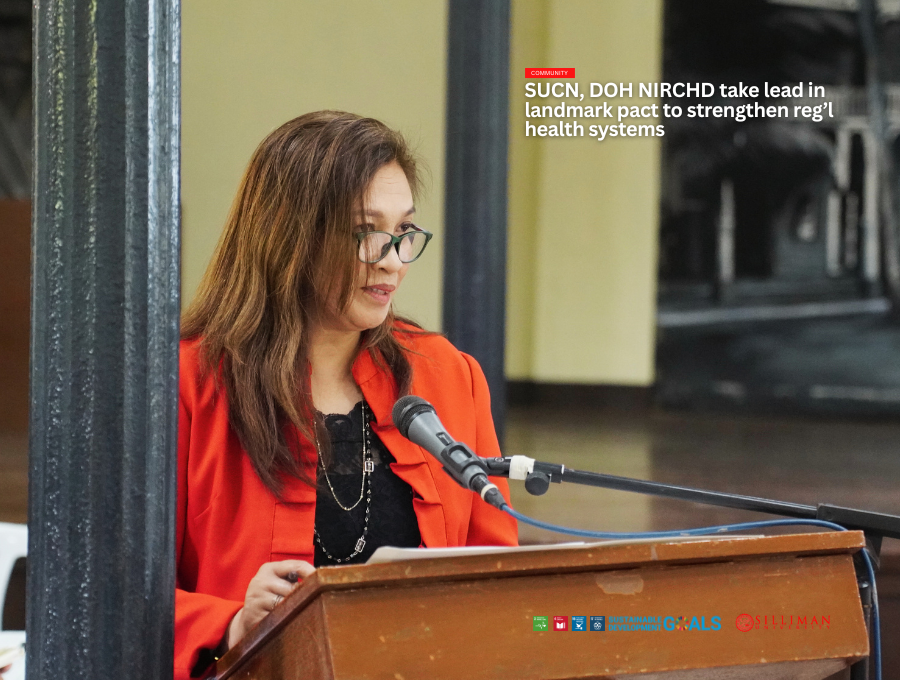
SUCN Dean Dr. Theorose Q. Bustillo delivers her welcome remarks.
In her welcome remarks, SUCN Dean Dr. Theorose Q. Bustillo underscored the multidisciplinary thrust of the collaboration.
“Public health challenges are complex. They cannot be solved by one department. That is why our approach is multidisciplinary. We’re deploying a great thrust of experts to tackle eight critical areas, from health research and laboratory strengthening to leadership, governance, and student engagement. By combining the DOH frontline expertise and Silliman’s professional services, we are creating a powerhouse for regional development,” Bustillo said.
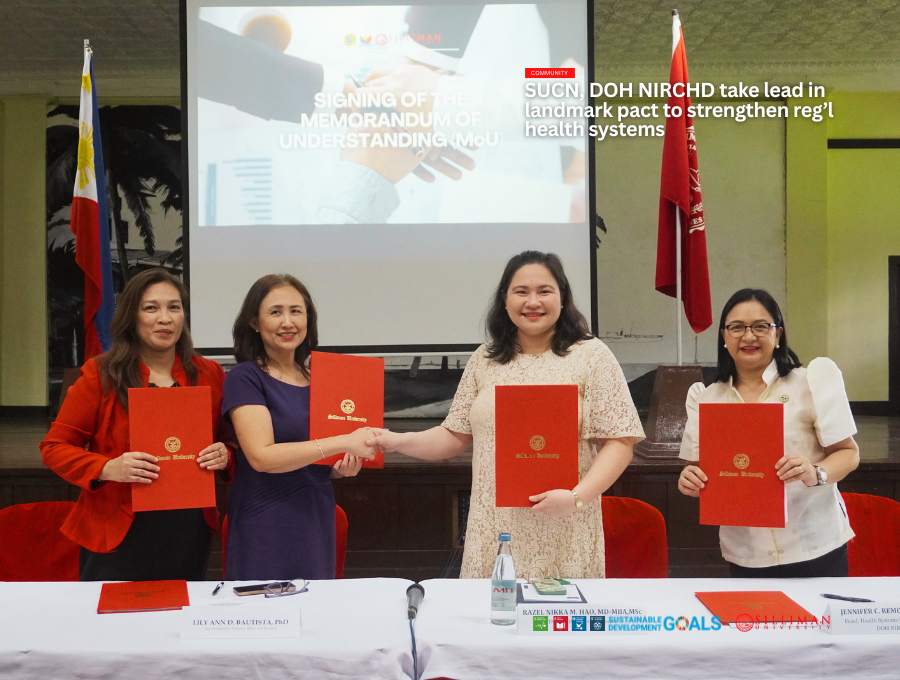
The Memorandum of Understanding was signed, SU and DOH NIRCHD affirm their commitment. (L-R) Dr. Theorose Q. Bustillo, SUCN dean; Dr. Lily Ann D. Bautista, SU vice president for Academic Affairs and Research (VPAAR); Dr. Razel Nikka M. Hao, Department of Health Negros Island Region Center for Health Development (DOH NIRCHD) regional director; and Jennifer C. Remollo, DOH NIRCHD Health Systems Integration Cluster (HSIC) head, represent both institutions for the inaugural MoU signing.
The MoU aligns with the Department of Health’s mandate to support the National Objectives for Health 8-Point Agenda toward achieving Universal Health Care (UHC), improving health outcomes, and reducing inequities, particularly in poor and rural communities in the region.
DOH-NIRCHD recognizes its Health Leadership and Governance Program—alongside health promotion, service delivery, research initiatives, and documentation of best practices through multi-stakeholder engagement—as strategic mechanisms to attain these goals.
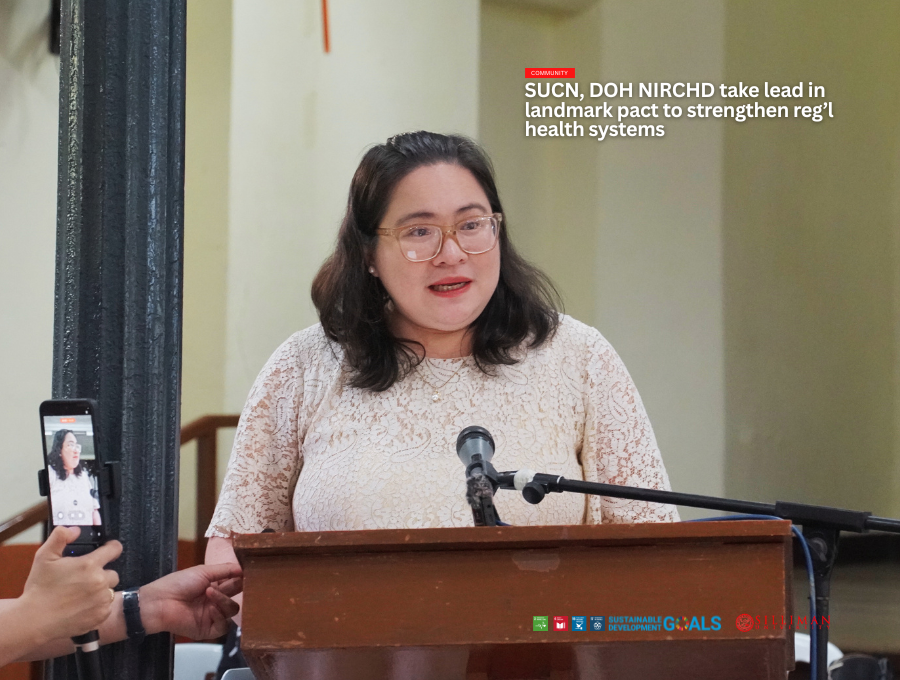
Dr. Razel Nikka M. Hao, Department of Health Negros Island Region Center for Health Development (DOH NIRCHD) regional director, shares her words of commitment.
Regional Director Dr. Razel Nikka M. Hao emphasized the need for deeper collaboration between government and academe.
“Today, what we are asking for is a more deliberate partnership—not just producers of graduates, but co-architects of a learning health system in NIR, because, as we all know, government cannot manufacture this alone,” Hao said.
“We are not looking for parallel academic activity. We are looking for embedded intelligence that helps the region in both current and future health movers make better decisions. We are looking for research that can be used on the ground to improve systems, and we are looking for capacity building that translates to measurable health performance,” she explained.
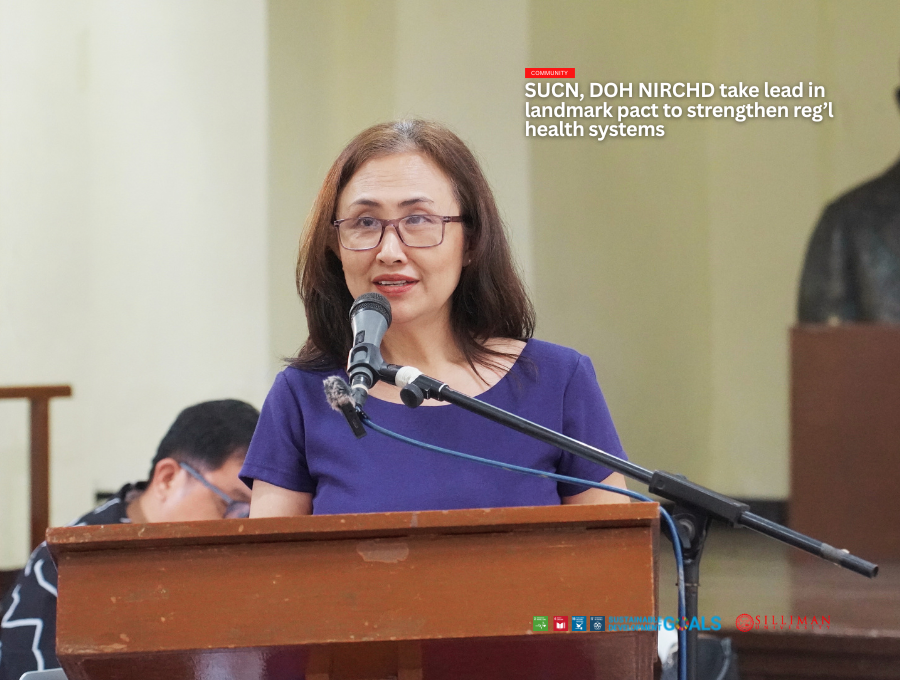
Dr. Lily Ann D. Bautista, SU vice president for Academic Affairs and Research (VPAAR), affirms SU’s commitment.
Under the agreement, SU will form resource teams with the necessary expertise to deliver training and technical assistance across eight key areas of collaboration:
- Health research and evidence generation – DOH-NIRCHD will identify priority research agenda areas aligned with regional and national directives, while SU will provide technical expertise in research design, data analytics, epidemiology, scientific writing, and dissemination.
- Capacity development and workforce strengthening – SU will serve as Lead Training Provider for internal institutional strengthening initiatives of DOH-NIRCHD.
- Community engagement and health promotion – Faculty experts, researchers, students, and partner networks may be deployed to support public health programs and community mobilization efforts.
- Public health laboratory systems – The parties will cooperate on technical assistance, research, training, and quality-improvement initiatives to strengthen laboratory systems in NIR.
- Policy development and technical advisory – Both institutions will collaborate on evidence-informed inputs for regional policy, operational frameworks, and strategic plans.
- Structured student academic engagement – The MoU facilitates student involvement in activities aligned with DOH programs and regional health priorities.
- Health leadership and governance – SU will provide expertise in curriculum development, systems thinking, strategic planning, performance management, coaching and mentoring, monitoring and evaluation, and documentation of best practices consistent with UHC implementation strategies.
- Health systems documentation of good practice – The partnership aims to strengthen the capacity of health personnel and stakeholders in documenting and disseminating innovations and lessons learned in health systems strengthening.
Dr. Lily Ann D. Bautista, SU Vice President for Academic Affairs and Research (VPAAR), affirmed the university’s commitment to its mission of total human development.
“Our university’s vision calls us to be a Christian institution leading in total human development for the well-being of society and environment. This collaboration directly advances that mission. Health system strengthening, leadership development, and evidence-informed public health interventions are essential to promoting human dignity, social well-being, and responsible stewardship of resources—values that are integral to our institutional integrity,” Bautista said.
“In this partnership, we bring technical expertise but also a values-based approach to leadership, governance, research, and community engagement. We are committed to ensuring that our faculty, researchers, and students engage with professionalism, ethical integrity, and a deep sense of responsibility for the communities we serve,” she underscored.
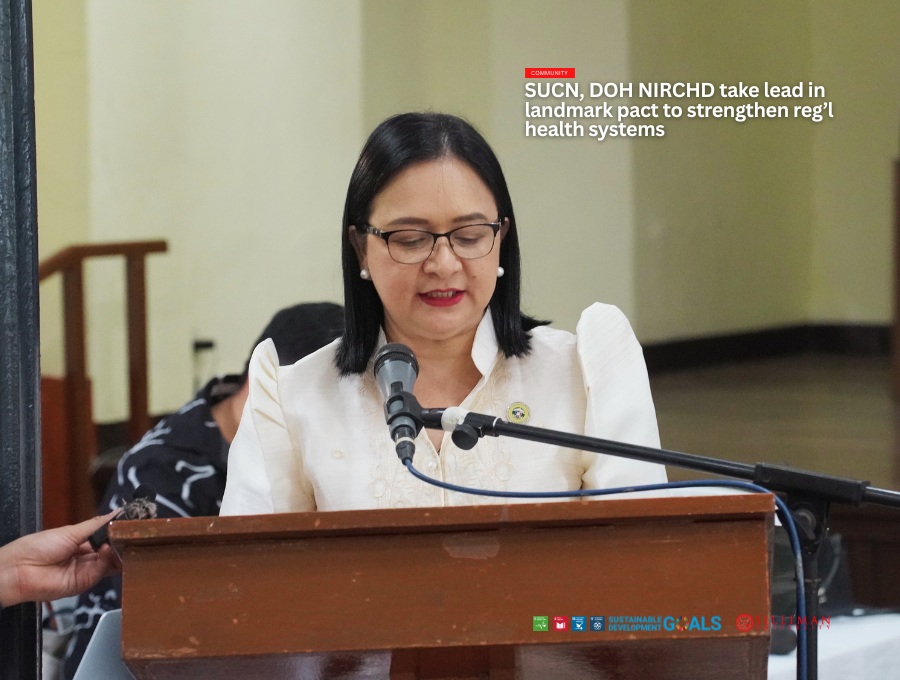
Jennifer C. Remollo, DOH NIRCHD Health Systems Integration Cluster (HSIC) head, explains the rationale of the MoU.
Jennifer Remollo, Health Systems Integration Cluster (HSIC) head, described the MoU as a platform for shared learning and applied innovation.
“This collaboration supports the development and adaptation of leadership and governance programs, including capacity-building initiatives for provincial, city, and municipal health leaders. It also serves as a platform for shared learning, applied research, and innovation, enabling continuous improvement in health service delivery and overall health system performance across Negros Island. More importantly, this partnership reflects our shared belief that health system strengthening is a collective responsibility,” Remollo said.
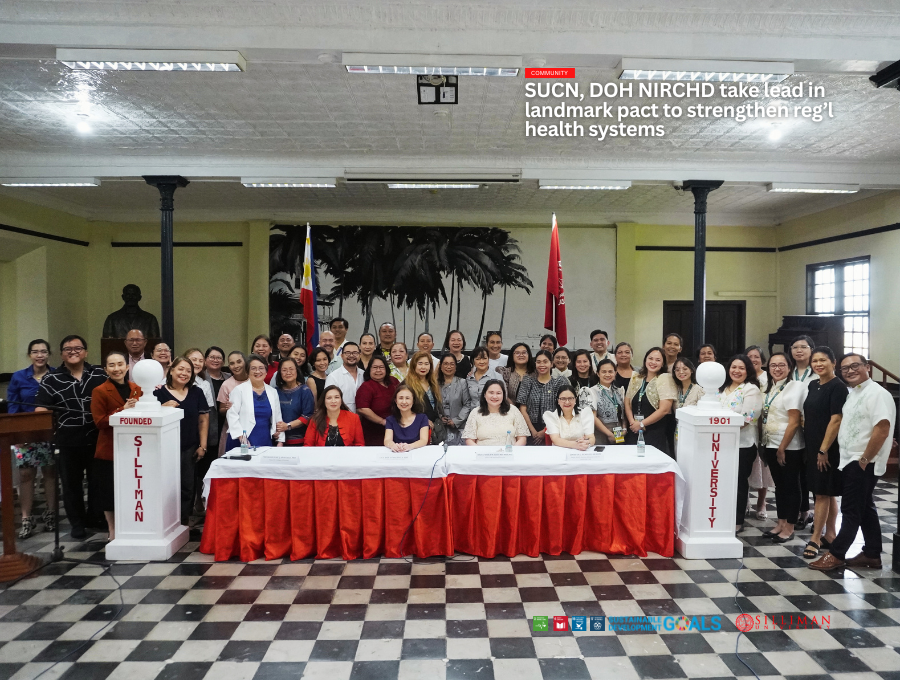
The inaugural MoU signing was joined by the DOH NIRCHD Executive Committee, SU academic and non-academic deans and directors; and local media friends.
Also present at the event were members of the DOH Executive Committee; Dr. Evalyn Abalos and Professor Lydia Siega-Sur, directors of the SU College of Nursing Center of Leadership Excellence in Nursing (COLEN); SU academic and non-academic deans and directors; and local media partners.
Through the MoU, SUCN and its partner colleges take on a strategic role not only in educating future health professionals but in shaping a responsive, evidence-driven, and community-centered health system for the Negros Island Region.


