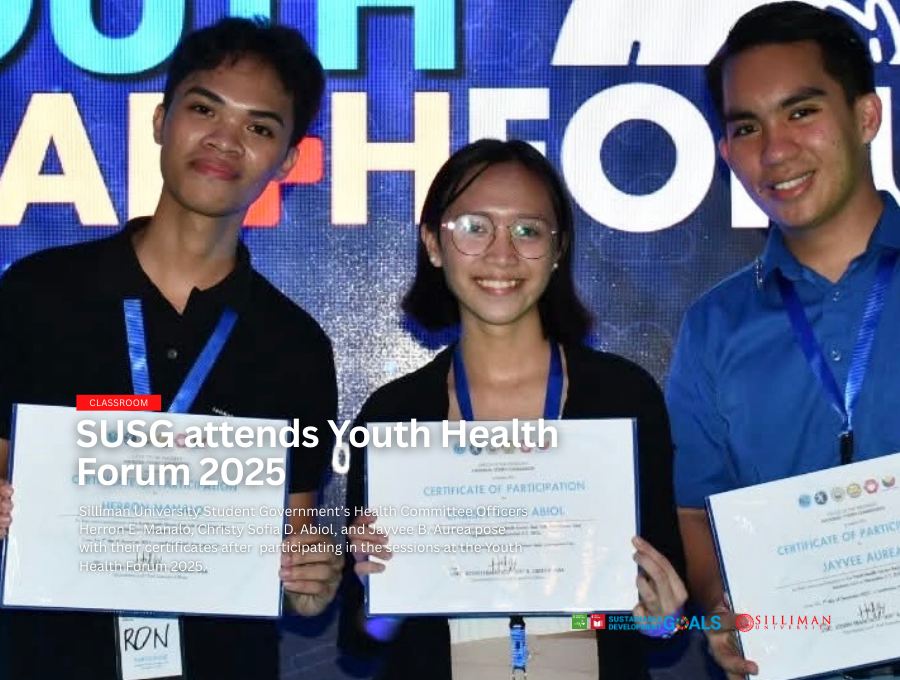
SUSG attends Youth Health Forum 2025
Student leaders from Silliman University took part in the Youth Health Forum 2025, a three-day youth-centered initiative organized by the National Youth Commission (NYC) to address pressing health issues affecting Filipino youth, particularly mental health, Sexual and Reproductive Health and Rights (SRHR), and HIV and AIDS, held from December 5-7, 2025 at the Southview Hotel in Dumaguete City.
Representing Silliman University were officers of the Silliman University Student Government (SUSG) Health Committee, led by Christy Sofia D. Abiol, chairperson, alongside Herron E. Manalo and Jayvee B. Aurea, both vice-chairpersons.
The Youth Health Forum gathered young leaders from various provinces and cities across the Philippines, including student representatives, Sangguniang Kabataan (SK) officials, campus organization members, and community youth advocates working in mental health, SRHR, and HIV awareness. The activity was supported by facilitators and resource speakers from partner organizations, health agencies, and youth-serving institutions, creating a collaborative learning environment that bridged government, education, and civil society sectors.
Designed to respond to the growing and often overlooked health challenges faced by Filipino youth, the forum provided participants with accurate, age-appropriate, and rights-based information while addressing how stigma, misinformation, and harmful social norms affect young people’s access to support and services. Discussions emphasized youth dignity, informed choice, and shared responsibility in fostering healthier and more inclusive communities .
Throughout the three-day program, the SU delegates joined expert-led lectures, multimedia presentations, and interactive discussions on mental health, SRHR, and HIV and AIDS. These were complemented by small-group breakout sessions that encouraged open dialogue in safe, nonjudgmental spaces, as well as skills workshops on peer counseling, effective communication, advocacy planning, and rights-based approaches to youth health concerns .
Participatory activities such as role-playing scenarios, group problem-solving exercises, and simulated community interventions allowed participants to apply their learning in practical contexts. Reflection sessions and team-building activities further fostered empathy, resilience, and solidarity among youth leaders. On the final day, participants developed action plans and proposed advocacy initiatives they could implement within their schools and communities after the forum.


