SU IEMS leads fish visual census training for coral reef restoration in Davao Oriental
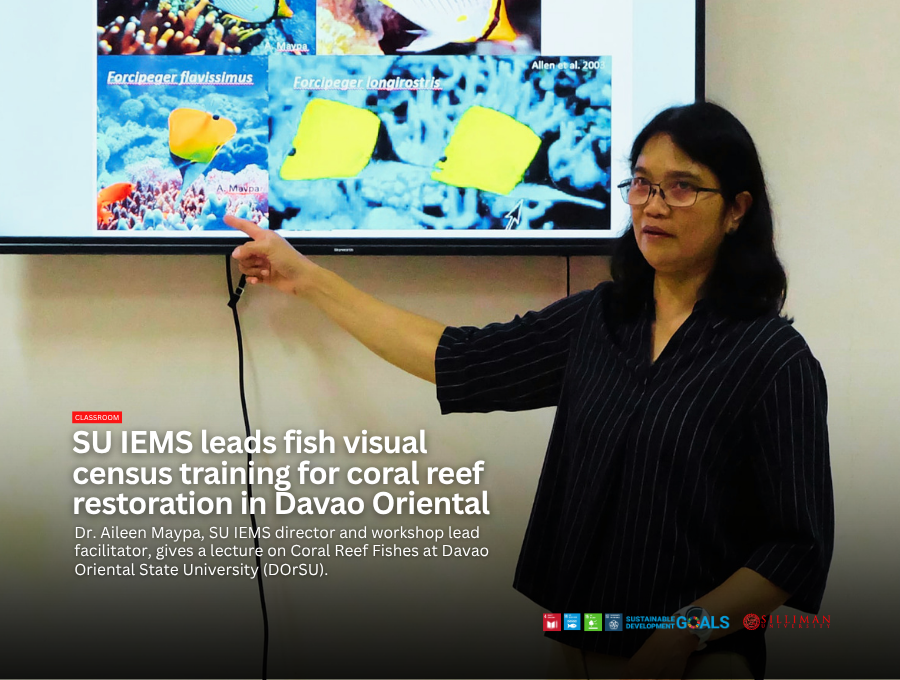
The Silliman University Institute of Environmental and Marine Sciences (SU IEMS) led a two-day Fish Visual Census (FVC) Training-Workshop that strengthened the capacity of researchers and coastal resource management practitioners in Region XI to monitor fish populations and support science-based coral reef restoration efforts.
Conducted on June 12-13, 2026, at the Davao Oriental State University (DOrSU) University Marine Research Laboratory and in the waters of Pujada Bay, the training was organized by IEMS in collaboration with DOrSU through its Regional Integrated Coastal Resource Management Center (RIC-XI), the City of Mati, Davao Oriental, and rrreefs (Rethinking, Rebuilding and Regenerating Reefs), a Swiss corporation and German non-government organization.
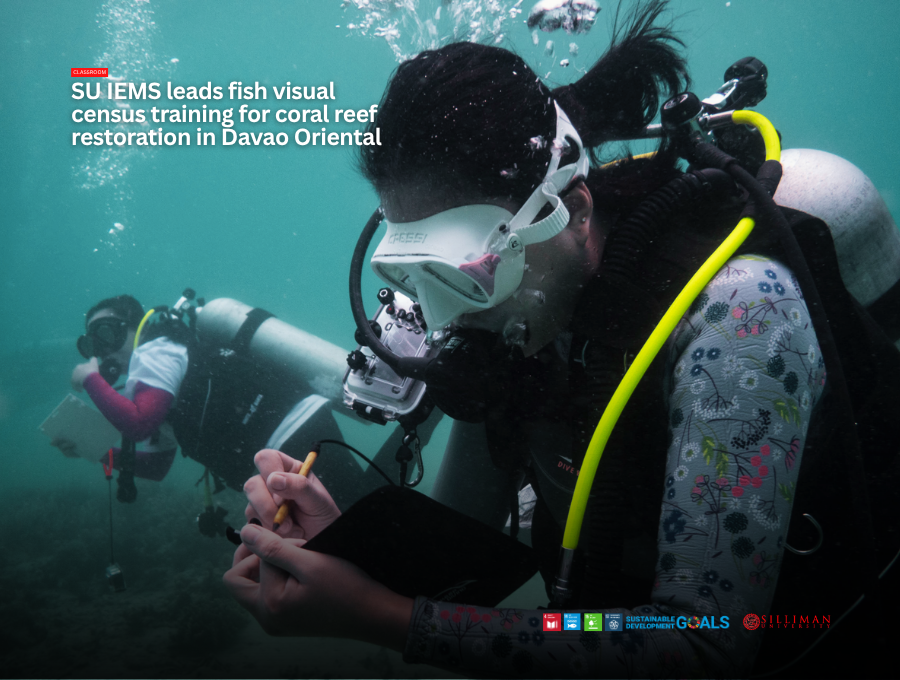
The workshop focused on Fish Visual Census, also known as Underwater Visual Census (UVC), a non-destructive scientific method in which trained divers or snorkelers identify, count, and estimate the size of fish within coral reef ecosystems. The technique is widely used to assess fish populations and estimate fish stocks in marine habitats.
The training team was led by Dr. Aileen P. Maypa, IEMS director and workshop lead facilitator. She was joined by Denzyl Divinagracia, Patricia Nicole Gajo, and Jhon Reimer Fardo, graduate students at IEMS and research assistants under Maypa’s Pew Charitable Trusts-supported project, Accelerating Coral Reef Recovery and Function Through Science-Based and Community-Friendly Restoration Toolkits in the Philippines.
The DOrSU research team was headed by Research Director Amy Ponce, together with research assistants Rheacin Polestico and Lorjie Bation, in collaboration with rrreefs personnel Adrielle Bianca Ferrazzini and Mary Cherryl Adlawan, who are based in Mati City.
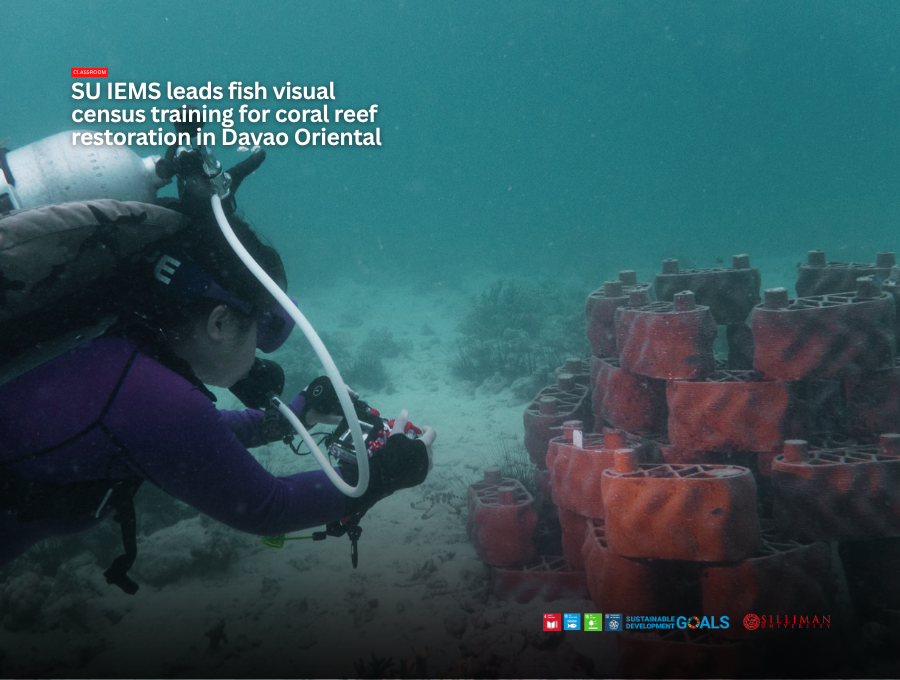
The training-workshop aimed to equip DOrSU researchers and coastal resource management practitioners with the knowledge and technical skills needed to assess fish stocks in coral reef ecosystems, particularly in sites where 3D-printed Artificial Clay Reefs (ACRs) have been deployed in Pujada Bay under permits issued by the Department of Environment and Natural Resources Region XI.
Monitoring fish populations is a key component in evaluating the effectiveness of ACRs as a coral reef restoration tool and their contribution to fish stock recovery.
The two-day training combined classroom lectures, mock Fish Visual Census exercises conducted on land, and hands-on underwater training using scuba equipment at ACR deployment sites in Pujada Bay.
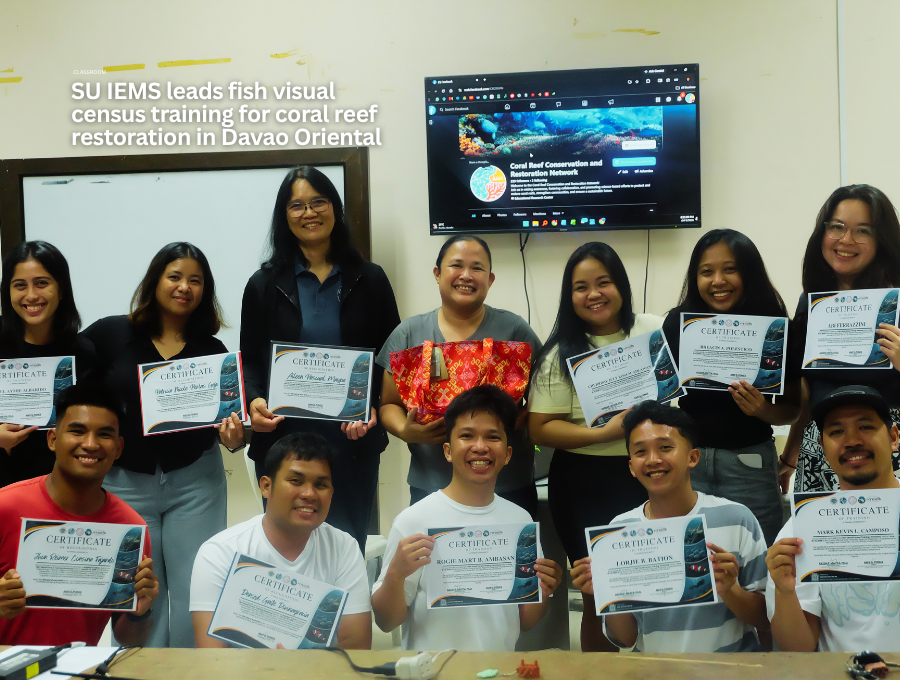
The Trainees and Trainers of the Fish Visual Census Training-Workshop led by SU-IEMS Director and Pew Fellow in Marine Conservation Dr. Aileen Maypa (third from left), with Davao Oriental State University (DoRSu) University Marine Science Laboratory (UMSL) Director Amy Ponce (center, back). The IEMS Training team members include Patricia Nicole Gajo (second left, back), Jhon Reimer Fajardo (first left, front), and Denzyl Divinagracia (second left, front).
A total of 15 participants attended the workshop, including members of the DOrSU research team, personnel from the Department of Environment and Natural Resources Region XI, rrreefs staff, and representatives from local communities where the ACRs have been deployed. DOrSU President Dr. Roy Ponce and Vice President for Research, Innovation, and Extension Dr. Emily Antonio also attended the activity. During the underwater field training, three representatives from the Philippine Coast Guard also joined the team.


