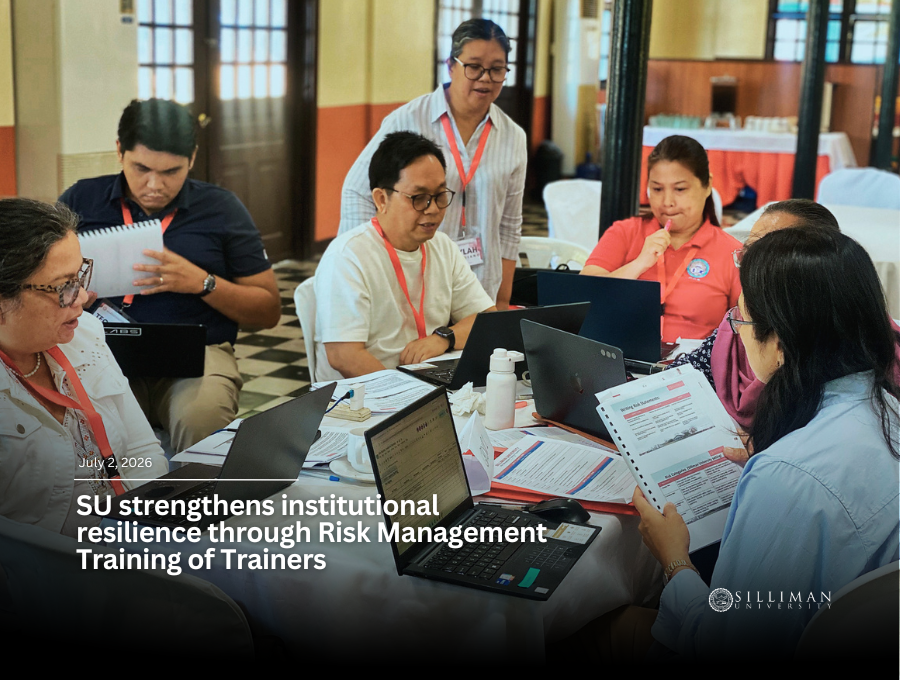
SU strengthens institutional resilience through Risk Management Training of Trainers
Silliman University (SU) gathered academic leaders, administrators, and key personnel for a two-day Risk Management Training of Trainers (TOT) on June 16–17, 2026, at the SU Hall, equipping participants with internationally recognized risk management frameworks to strengthen institutional resilience, governance, and decision-making across the University.
Guided by internationally recognized frameworks such as ISO 31000:2018, COSO Enterprise Risk Management (ERM), and the COSO Internal Control Framework, participants were introduced to practical approaches for identifying, assessing, prioritizing, and managing risks that may affect the achievement of SU’s mission and objectives.
The training was facilitated by a multidisciplinary team composed of the University Chief Finance Officer (CFO) Atty. Eduisa Rositte C. Diocos; Asst. Prof. Mylah R. Bomediano; Roselle Marie B. Montenegro; and Joyce Mae M. Pino.
Throughout the two-day program, participants explored the evolving role of risk management in higher education institutions, particularly in today’s volatile, uncertain, complex, and ambiguous (VUCA) environment.
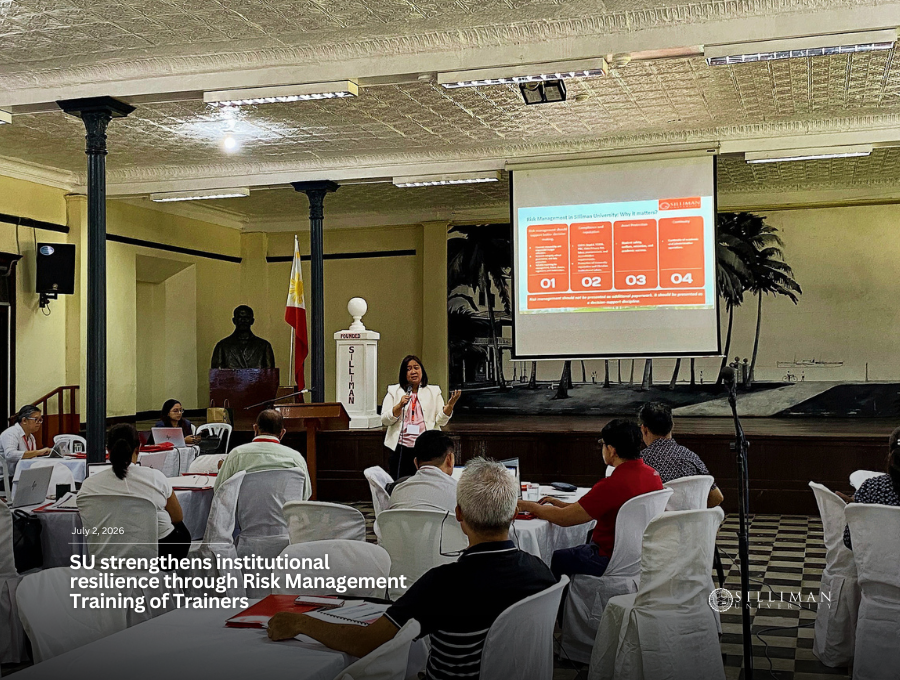
Atty. Eduisa Rositte C. Diocos, chief finance officer, facilitates the discussion on why risk management matters at SU.
Discussions emphasized that risk management is not merely a compliance requirement but a decision-support discipline that enables institutions to protect their mission, safeguard resources, improve performance, and respond proactively to emerging challenges.
The sessions covered a broad range of topics, including risk management principles and frameworks, risk identification methodologies, risk assessment and prioritization techniques, risk appetite and tolerance, strategic risk responses, business continuity considerations, internal controls, and the development of risk registers.
Particular attention was given to risks commonly faced by universities, including academic quality, student welfare, information security, regulatory compliance, financial sustainability, operational continuity, and reputational management.
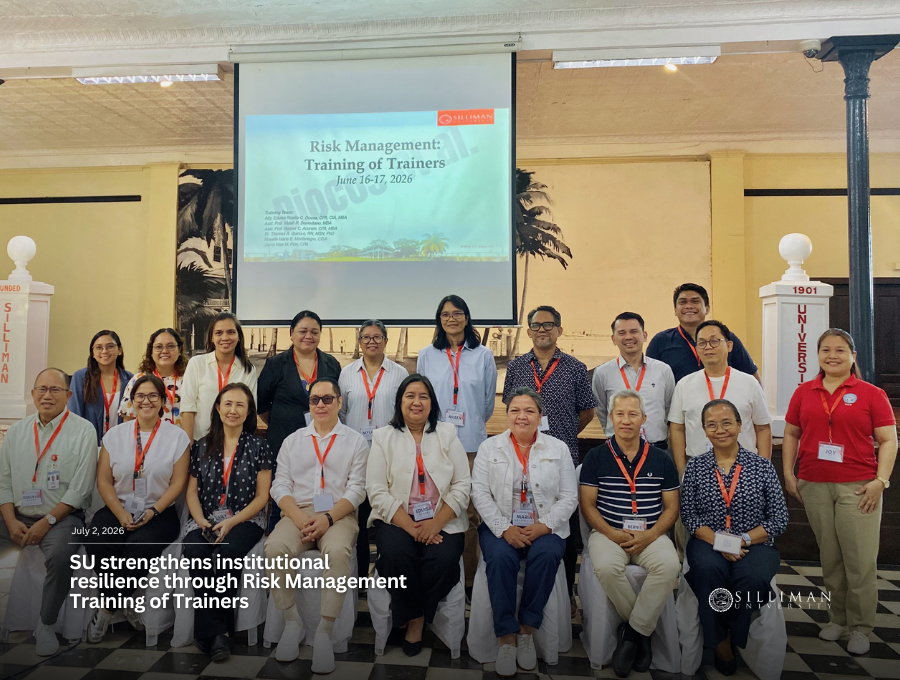
The Risk Management Training of Trainers concludes with members of the SU administration posing for a quick photo at SU Hall.
The workshop also highlighted the importance of integrating risk management into everyday decision-making processes and aligning risk considerations with institutional objectives, key performance indicators, compliance requirements, and resource allocation decisions.
By adopting a Training of Trainers approach, SU aims to develop a pool of risk management champions who can facilitate risk discussions and support the implementation of risk management practices within their respective units.
The initiative is expected to contribute to the establishment of department-level risk registers and strengthen enterprise-wide risk awareness throughout the University.


