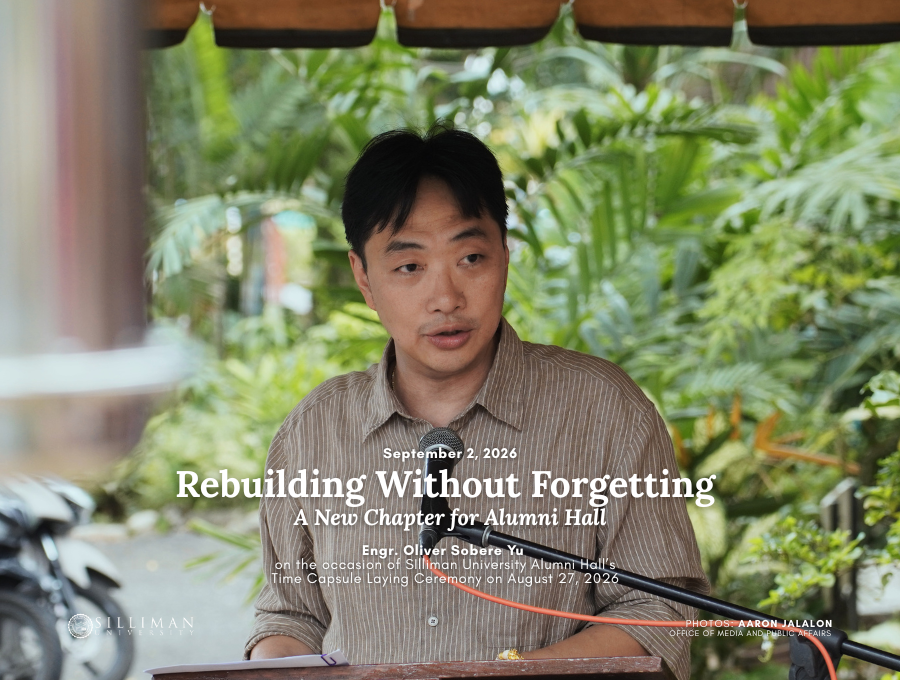
Rebuilding Without Forgetting: A New Chapter for Alumni Hall
Rebuilding Without Forgetting
A New Chapter for Alumni Hall
Engr. Oliver Sobere Yu
(Delivered on the occasion of the SIlliman University Alumni Hall’s Time Capsule Laying Ceremony on August 27, 2026)
Good day to everyone.
To the Silliman University Administration, the Silliman Alumni Association, Inc. Board of Trustees headed by Sir Adlai, Engr. Betsy Engle, members of the Silliman University Board of Trustees, the University Legal Team, our partners and colleagues, friends, and to everyone who has gathered here today—a pleasant day to all.
Today is a very special and meaningful occasion.
We are gathered here to mark the beginning of a new chapter in the life of the Silliman University Alumni Hall. And today, as we lay this time capsule, we are doing something very meaningful. We are placing a part of our present into the ground so that the people of the future will have the opportunity to look back and understand what this moment meant to us.
The Silliman University Alumni Hall traces its beginnings to the 1950s. In 1962, Engr. Juanito T. Magbanua formally turned over the Alumni Hall to the University Administration. Generations of students, alumni, faculty, administrators, and members of the Silliman community have passed through its doors.
For many Sillimanians, the Alumni Hall is not simply a building. It is a place filled with memories.
Over the years, the University undertook various repair and retrofitting measures to extend the life of the existing building. However, the condition of the structure progressively deteriorated.
Among the major concerns was extensive termite infestation and the resulting deterioration of structural and building components, and the recurrence of seismic activity. An independent third-party structural assessment was commissioned by the Silliman University Buildings and Grounds Office, now FMAS, with the assessment results dated December 17, 2024. After considering the condition of the existing structure and the requirements for safety and long-term use, rebuilding was determined to be the more appropriate approach. This decision was not made lightly. Because rebuilding an old and historically meaningful building is never simply about removing what is old and replacing it with something new. What should we preserve? What should we carry forward? And what should we build for the generations that will come after us?
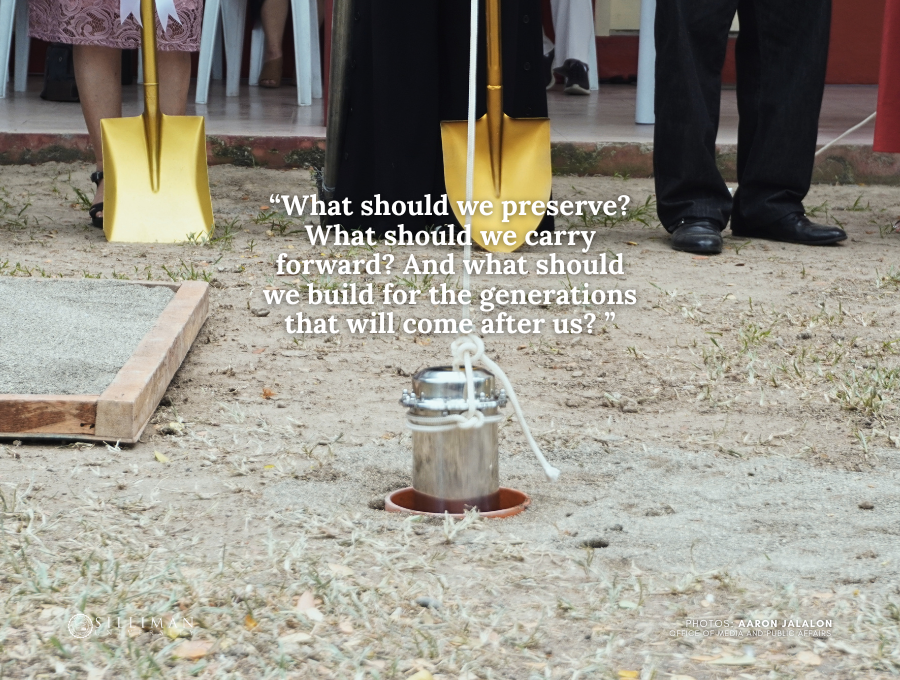
Rebuilding but not forgetting
The proposed Alumni Hall is therefore envisioned not simply as a replacement. It is a continuation of the story. The objective is to retain the recognizable architectural character and identity of the original Alumni Hall while providing a new building that will be safe, accessible, structurally sound, and capable of serving the University and its alumni for many years to come.
Important architectural elements and concepts of the original building will be retained. The recognizable character of the façade will be preserved. The brick-design wall and the diagonal red wall will be retained. And wherever possible, significant existing materials will be recycled and incorporated into the new building. The materials and structural systems may change. But the intention is for the identity and spirit of the Alumni Hall to remain.
Because preservation is not always about keeping every physical component exactly as it was.
Sometimes, preservation means carrying forward what is meaningful while giving it a new life.
Respecting the heritage process
It is also important to recognize the careful process that has brought us to this point.
Based on the records reviewed for the project, the Silliman University Alumni Hall is not expressly identified in the National Historical Institute Resolution No. 07, Series of 2002, nor is it understood to be among the officially listed heritage structures in the applicable national or local heritage registers.
Nevertheless, Silliman University and SAAl have recognized the historical and institutional significance of the Alumni Hall. For this reason, the appropriate legal, cultural-property, heritage, permitting, and regulatory processes have been pursued. Silliman University, with the support of SAAI, filed the necessary petition and secured the relevant documentation from the National Commission for Culture and the Arts on July 21, 2026.
And just yesterday, August 26, 2026, the National Historical Commission of the Philippines conducted its Board meeting as part of the appropriate review and deliberative process for petitions and clearances submitted to the Commission. This process reminds us that rebuilding is not simply about construction. It is also about responsibility—responsibilities to the institution, to its history, and to future generations.
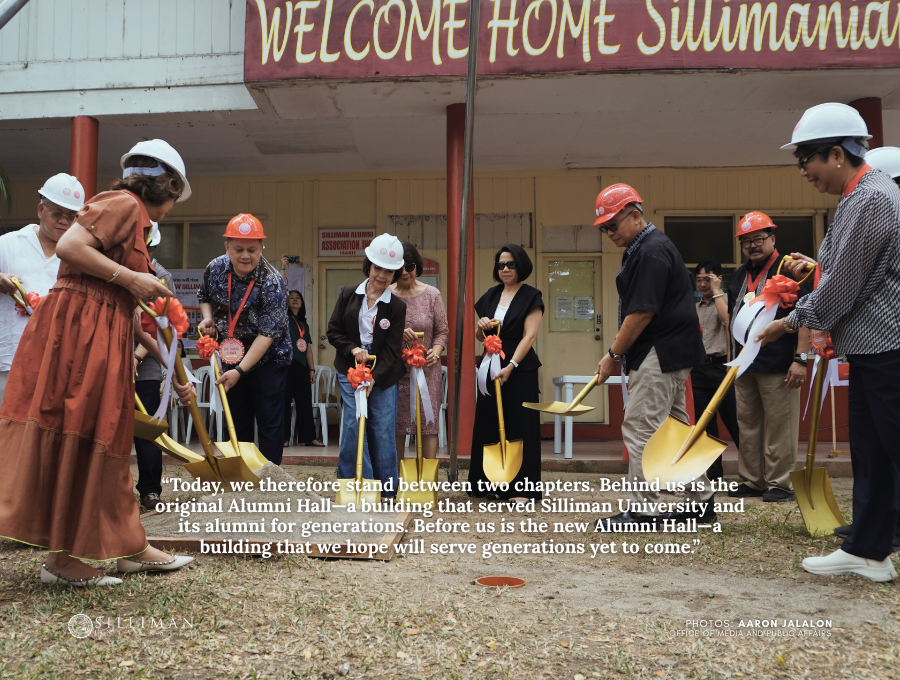
The meaning of today’s time capsule
And this brings us to the significance of today’s ceremony.
A time capsule is a simple object. But what we place inside it represents much more than documents or memorabilia. It represents who we are today. A moment when Silliman University, SAAI, and all those involved in this undertaking made a decision to move forward—not by forgetting the past, but by honoring it.
A new chapter begins
Today, we therefore stand between two chapters. Behind us is the original Alumni Hall—a building that served Silliman University and its alumni for generations. Before us is the new Alumni Hall—a building that we hope will serve generations yet to come. And today, we begin to build that bridge.
The new Alumni Hall will be different in many ways. It will use modern materials, modern structural systems, and modern building requirements. But its purpose remains deeply connected to the original: to be a place where people gather, where memories are created, where alumni reconnect, and where the Silliman spirit continues.
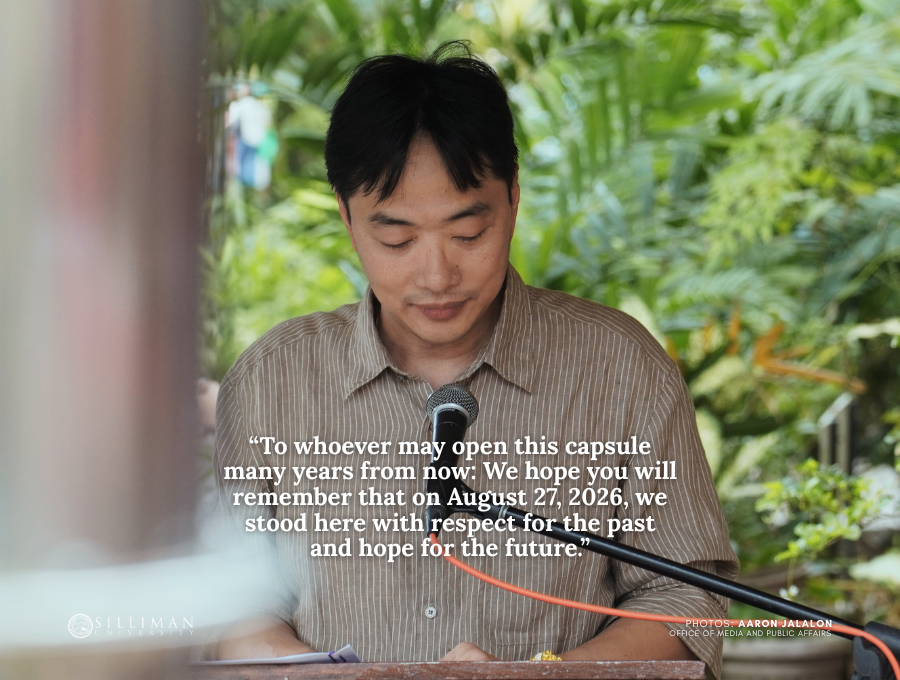
A message to the future
As we lay this time capsule today, I would like to imagine that we are sending a message to the Sillimanians of the future.
To whoever may open this capsule many years from now: We hope you will remember that on August 27, 2026, we stood here with respect for the past and hope for the future. We remembered the Alumni Hall that served generations before us. We recognized the need to rebuild. Because buildings eventually age. But the memories, traditions, relationships, and spirit of an institution can continue from one generation to another.
On behalf of Sobere Yu Construction, I would like to express our deepest and most sincere gratitude for the trust and confidence extended to us in entrusting this significant and historic project to our team.
Our heartfelt appreciation goes to the Silliman Alumni Association, Inc. Board of Trustees, headed by Sir Adlai, for your confidence and support. To Engr. Betsy Engle – Mam, Executive Director RD, and the entire SAAl staff, thank you for your unwavering support, patience, dedication, and hard work throughout this undertaking.
We likewise extend our sincere gratitude to the Silliman University Board of Trustees and the University Administration for the confidence you have placed in us.
Our appreciation also goes to the FMAS team (headed by Engr. Mamhot), the University Legal Team (headed by Atty. Karissa Tolentino Maxino), and everyone who worked tirelessly behind the scenes to complete the many requirements necessary to bring this project to this important milestone.
And to my team at Sobere Yu Construction—thank you. Thank you for your dedication, hard work, patience, and commitment. It is our privilege to help build not only a structure, but a new chapter in the continuing story of Silliman University.
May this project stand as a lasting legacy of our collective efforts—honoring the past, serving the present, and inspiring generations to come.
God bless Silliman University. God bless the Silliman Alumni Association. And God bless everyone who has made this day possible.
Thank you very much, and good day to everyone.


